
Approach &
Outcomes
Our goal: Hope
“Hope may be fostered through identifying valued and personally meaningful goals, defining them in clear measurable terms, and identifying multiple potential avenues through which goals can be attained.”
Hope is the foundational of our approach, and we seek to develop it through our programmes, educational resources, community events, and advocacy. We have chosen hope as a key indicator of wellbeing, not only because this connection is supported by research, but also because, in our experience, hope can have a profound impact on the lives of participants, their communities, and outside observers.
These goals also contribute to reducing the significant social and economic cost of neurological conditions to New Zealand’s communities, while promoting a wider kōrero around what’s possible after a neurological diagnosis.
Read more about the evidence supporting hope, and how we incorporate hope theory into our resources.

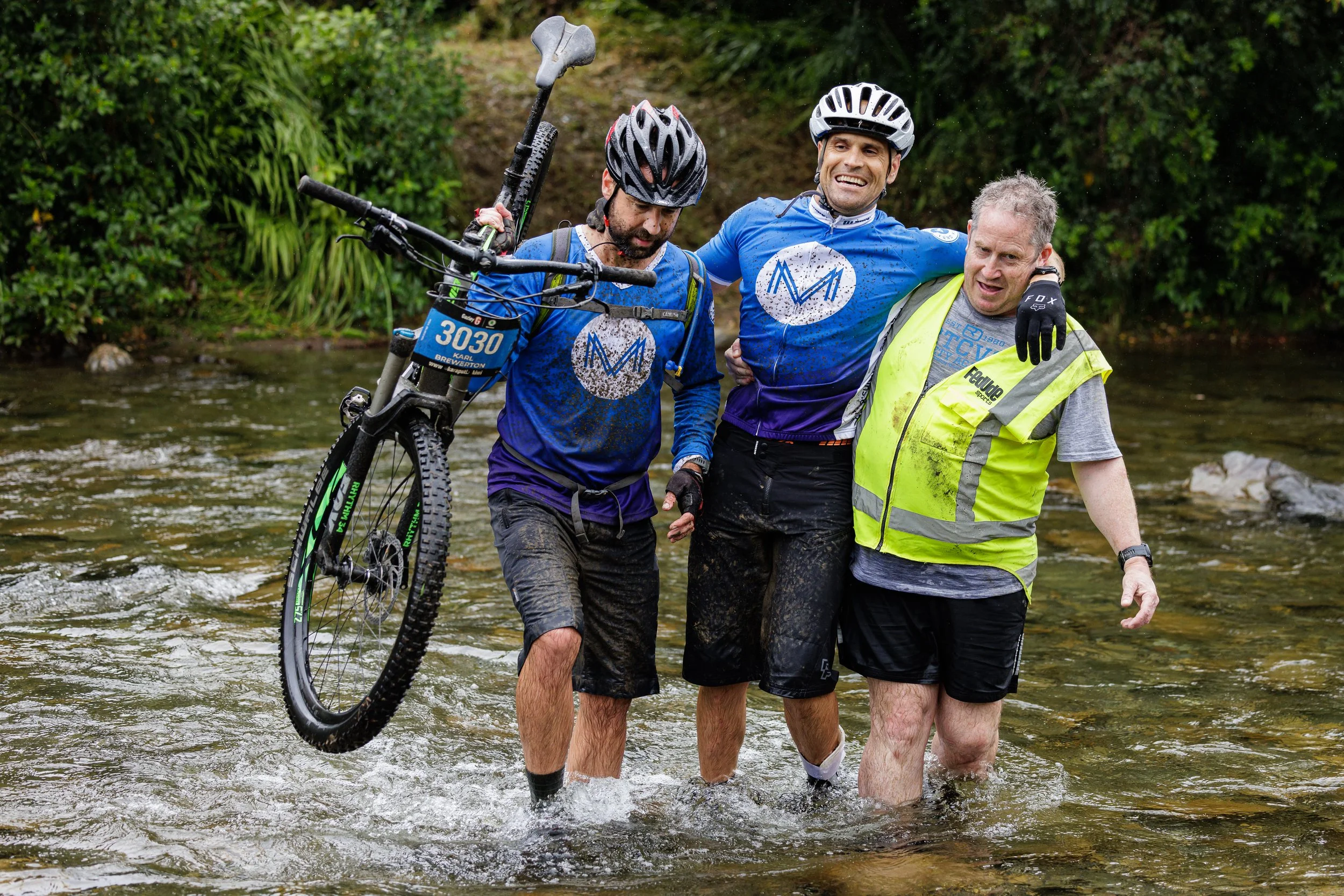
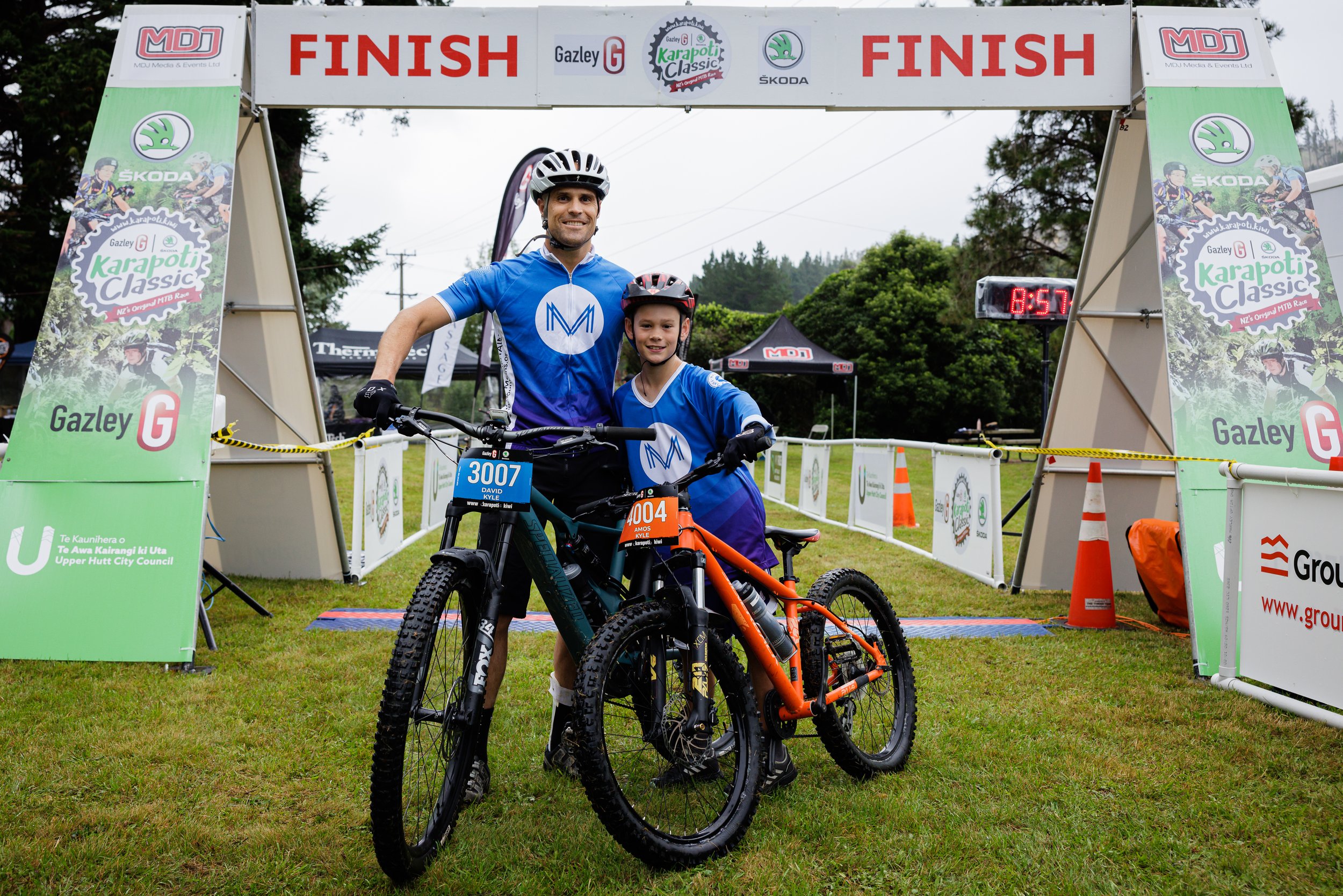
2022 Programme participant, David Kyle (second from right), at the Karapoti Classic mountain bike race. Photo by Andrew Turner
Our approach
Our unique approach to cultivating hope is evidence-based and focuses on three key strands: engaging in outdoor physical activity, fostering social connection, and setting goals. These strands interact with each other, powerfully increasing wellbeing and, most importantly, hope.
Strand 1: Outdoor activity
Neurological conditions can create many barriers to getting outdoors, and our programme helps people overcome them. Programme participants select an outdoor adventure they want to achieve, and we connect them with the rehabilitation support, psychoeducational resources, and the guidance needed to safely achieve that goal, (re)connect with community, and maintain long-term access to the outdoors.
Strand 2: Strengthening connection
People with neurological diagnoses often feel socially isolated and struggle to find or participate in community. Our programme participants gain access to a community of peers who love to get outdoors, despite their neurological conditions. We host monthly support groups that enable programme participants to share knowledge and experience, and to walk alongside each other through the highs and lows of their rehabilitation journeys. We also strongly encourage programme participants to include others in their adventures, building stronger social connections with friends, family, and their local community.
Strand 3: Goal setting
Our programme participants select meaningful outdoor adventure goals that challenge and inspire them. For individuals with neurological conditions who enjoy the outdoors, an anticipated exciting adventure can serve as a goal, offering a meaningful and inspiring objective that helps them maintain motivation throughout their lengthy rehabilitation journey.
We also use goal setting and the rehabilitation journey as a means of developing the components of hope. The mentoring component of our programme, along with our curriculum and resources, is designed to help people with health conditions grow their sense of wellbeing, connectedness, and hope. Completing our programme, participants will have the tools to break down their goals and navigate any obstacles in many of their life domains.
Testimonials
-
![Bryce Mackenzie]()
"This programme opened my mind. With a bit of help, I have achieved something that I thought I may not be able to do."
Bryce Mackenzie
-
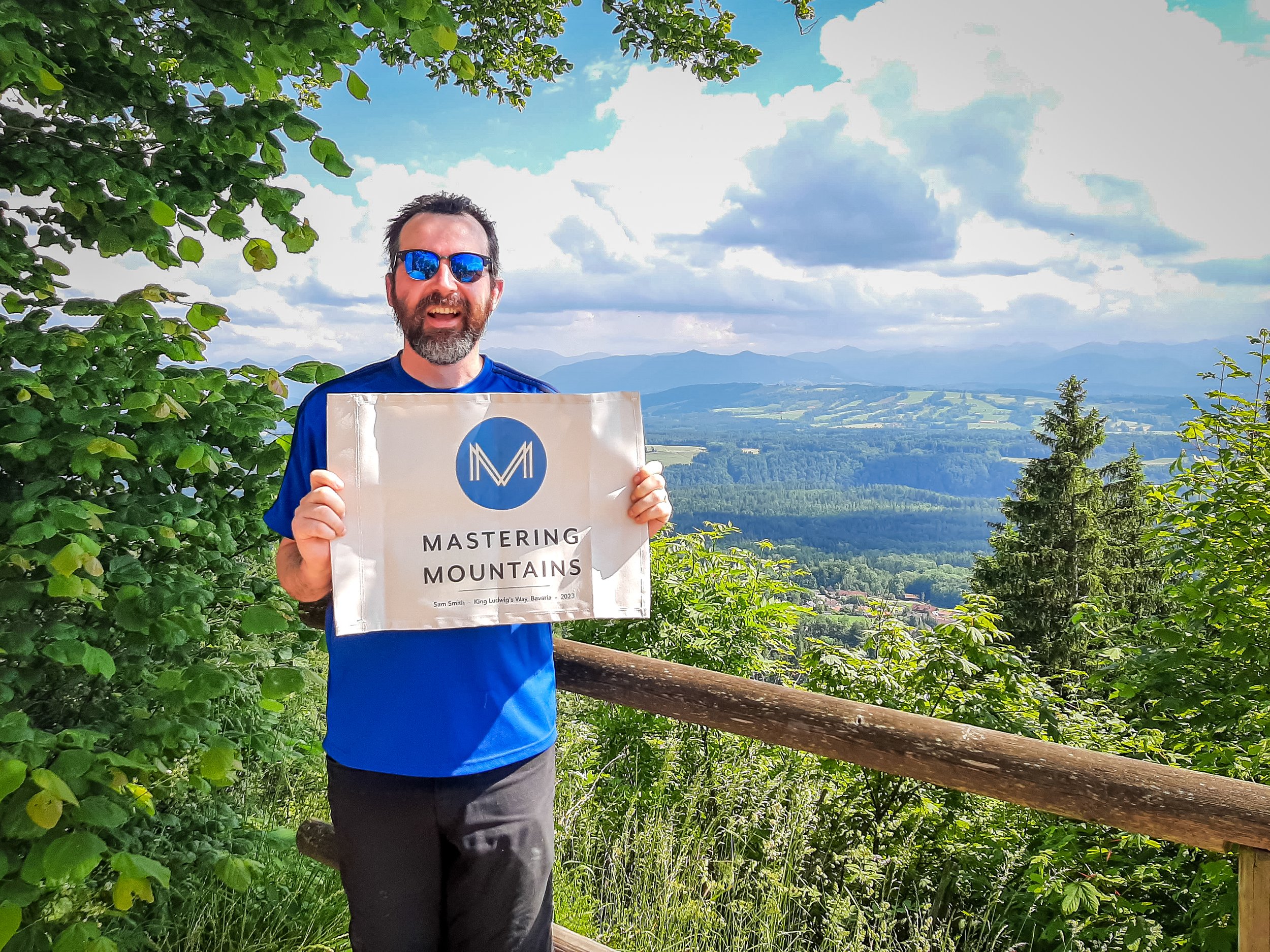
![A man with sunglasses and a beard holding a sign that reads 'Mastering Mountains' with a castle and lush green trees in the background.]()
"It was so awesome to realise that I can do all these things that I previously thought were off the table."
Sam Smith
-
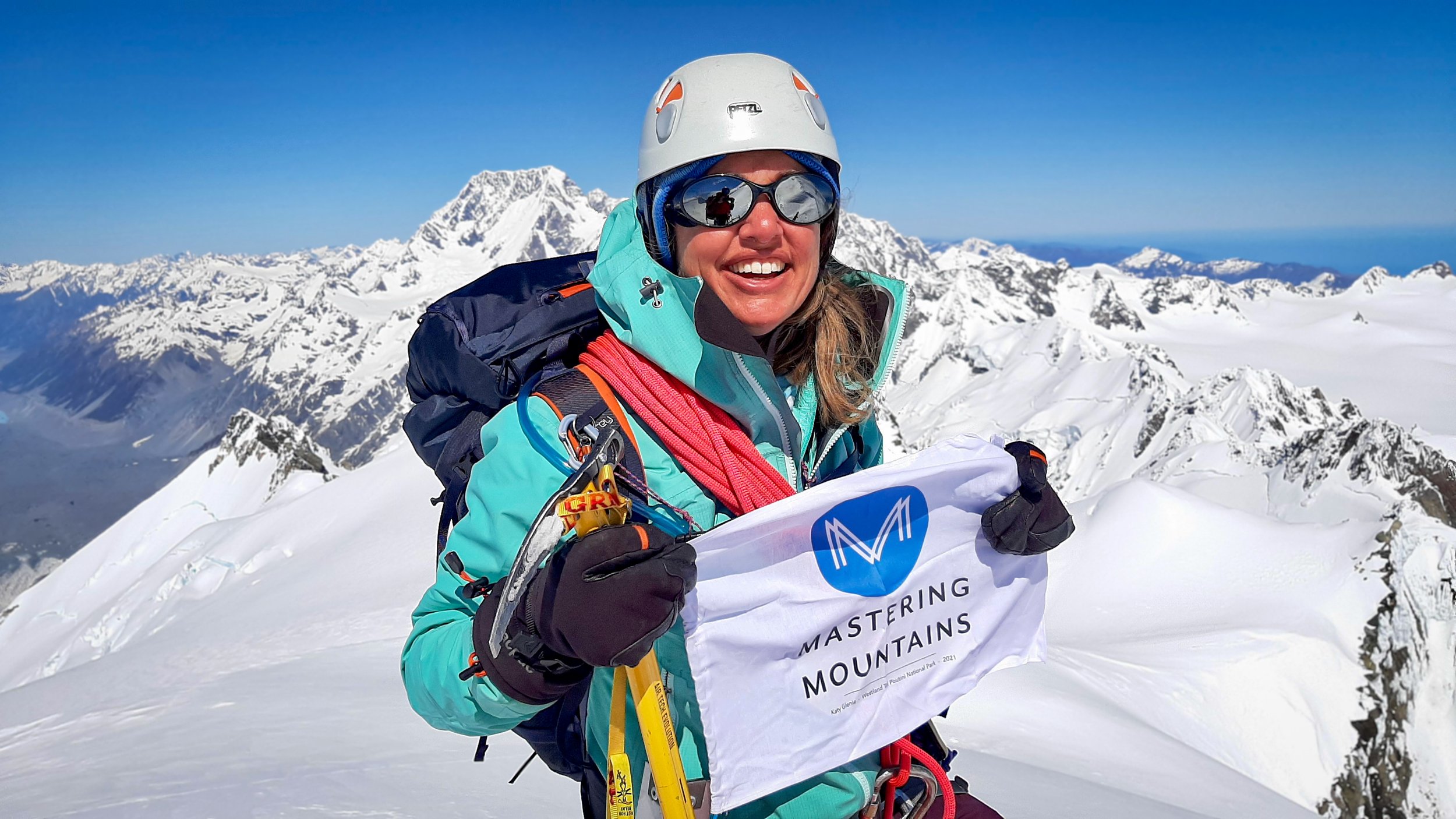
![Katy Glenie]()
"I had thought that my life could no longer be full of adventures in the outdoors after my diagnosis. I now know there are so many ways to seek and find adventure."
Katy Glenie
-
![David Kyle]()
"This has been trajectory altering, enabling me to continue MTB riding with friends and giving me more confidence about the future in terms of riding with my son."
David Kyle
-
![Kirsten Dixon]()
"With the right support I can achieve more than I thought! I have shed some self limiting beliefs I imposed on myself with diagnosis."
Kirsten Dixon
-
![A woman outdoors in front of mountains, holding a banner that reads 'Mastering Mountains' with a logo, patches, and text, smiling and wearing glasses and a sleeveless top.]()
"Empowering & life-changing. I can barely hold back the tears as I reflect on how deeply I have been cared for and supported in my disability and pathway back to the outdoors journey."
Raffaela Dragani
-
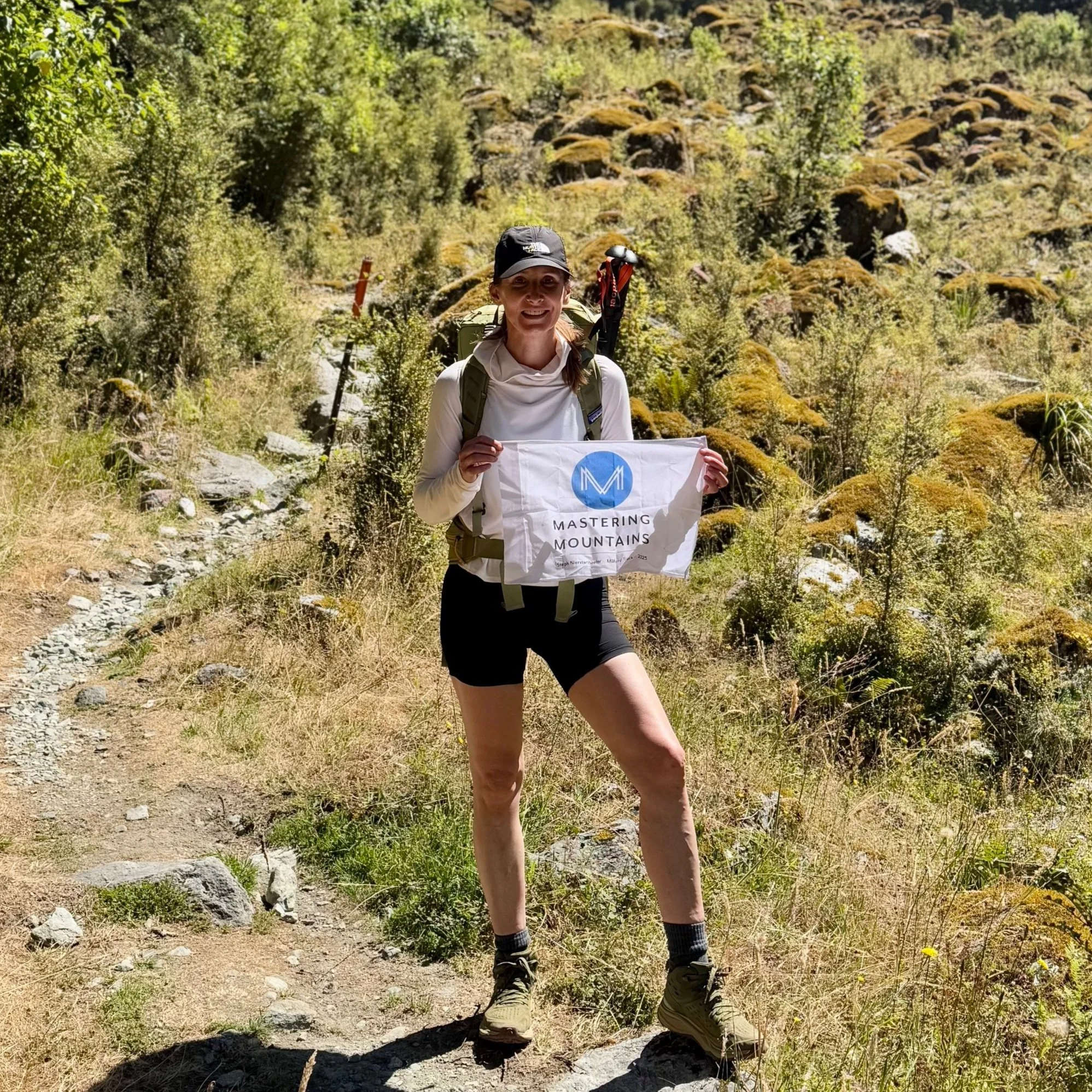
![A woman hiking on a mountain trail, holding a flag that reads 'Mastering Mountains,' surrounded by green bushes and rocks.]()
"Mastering Mountains helped me accept & open up about my diagnosis, showing me that setbacks aren't the end but part of the journey - and that I can still embrace adventure in my own way."
Steph Nierstenhoefer
-
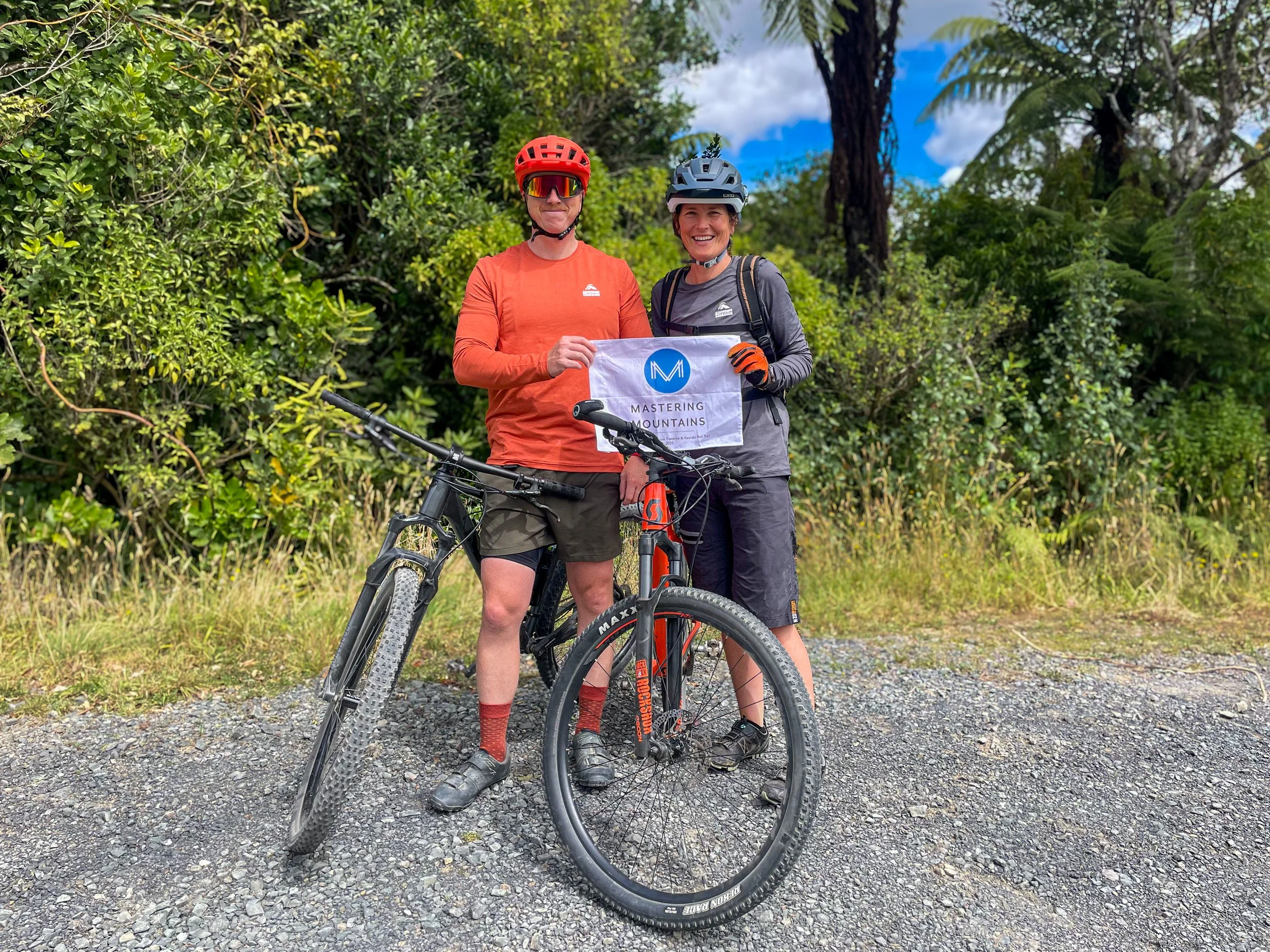
![Two women in biking gear standing outdoors on gravel path, holding a sign that says 'Mastering Mountains.' One woman is wearing a red helmet, sunglasses, an orange shirt, and shorts, with a mountain bike; the other woman is wearing a gray helmet, a gray long sleeve shirt, and black shorts, also with a mountain bike. Lush green trees and bushes are in the background with a partly cloudy sky.]()
"Mastering Mountains has changed my life – I now have goals and aspirations that I never imagined were possible."
Jodie Leqeta


Our outcomes
Our approach is intensive. Since 2015, we have invested substantially and prudently in quality individuals. Consequently, we have significantly improved and positively affected the lives of our programme participants and those around them.

Our budget places a strong emphasis on rehabilitation, individual and group support and education. We aim to keep our running costs as low as possible, enabling us to invest substantially in quality individuals who are committed to the rehabilitation process and primed to respond positively to our interventions.
On average, we invest $6,800 in each person over the course of one year to help them achieve their dream adventure and find hope. This investment covers the cost of our full service package, which includes one year’s worth of:
$3,100 - mentoring support: 16 hours of one-on-one mentoring and support, in addition to 10 hours of group support and learning.
$2,150 - specialist rehabilitation: access to a gym and 10-12 appointments with a neurophysio and exercise physiologist.
$1,550 - gear, equipment and expedition programme costs, such as food and group safety equipment.
Four themes consistently emerge in the interviews and feedback we receive from participants who complete their trips (n=14 | 2017-2025): they have a greater sense of agency and see new pathways to a more hopeful future; they have significantly benefitted from mentoring and community with similar others; they intend to remain connected to others; they have set new outdoor adventure goals. In other words, they report a greater sense of hope.
As a result of our programmes, people see an increase in key wellbeing markers. On average, our programme participants* experience an increase in the following measures after (by comparison to before) their journey with Mastering Mountains:
28.2% increase in resilience, measured by the Brief Resilience Scale (Smith, Dalen, Wiggins, Tooley, Christopher, & Bernard, 2008)
38.6% increase in happiness, measured by the Pemberton Happiness Index (PHI: Hervas & Vazquez, 2013)
*n=5 | 2023-2025 - gathered using Work on Wellbeing assessment tool

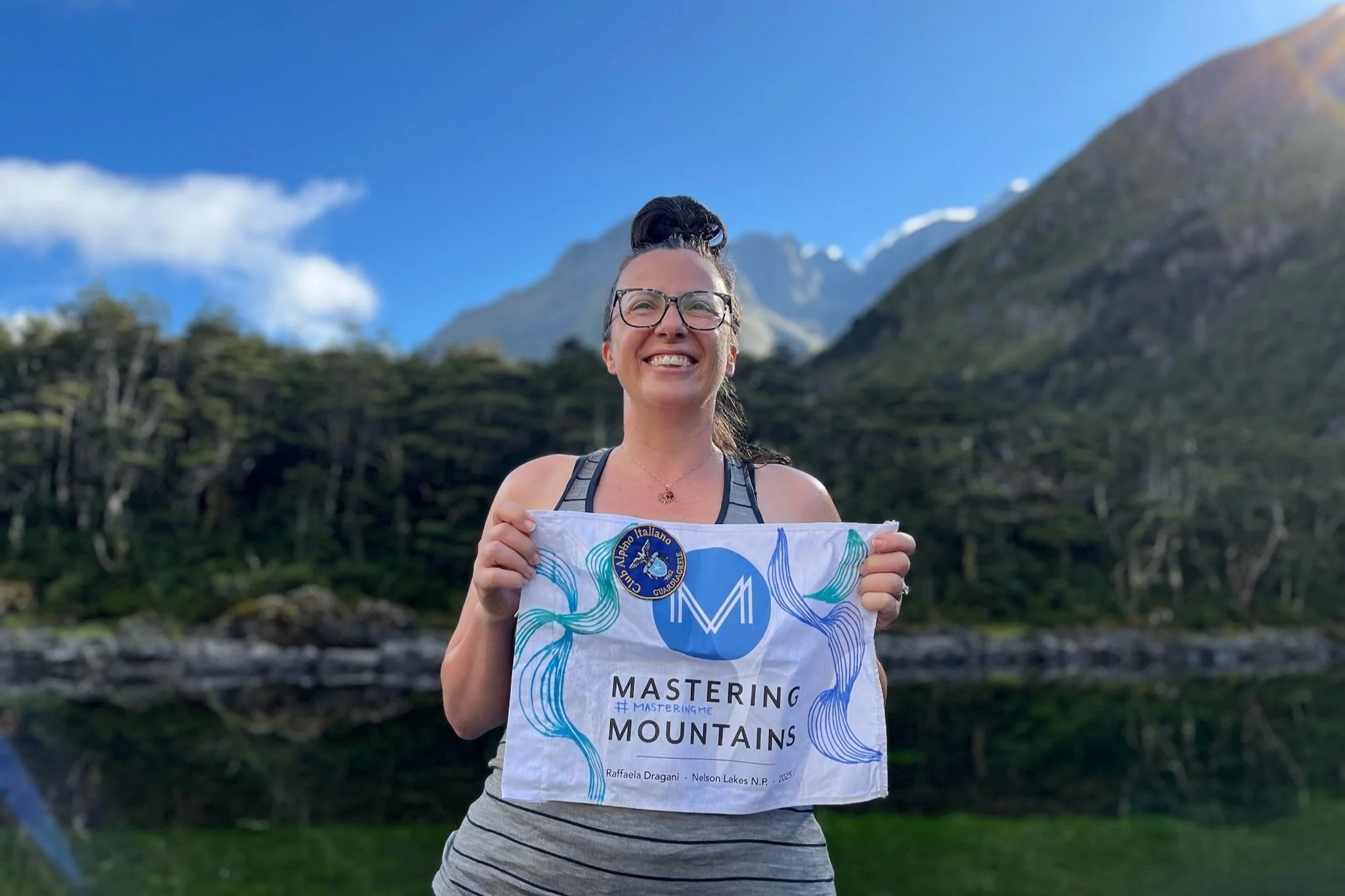
Testimonial: Raffaela Dragani (FND & Parkinson’s)
Raffaela has FND and Parkinson's and, early in her journey with us, struggled to walk from her car to her office. After 18 months of rehabilitation and mentoring support, alongside two friends, she successfully accomplished a long-held dream of completing a demanding, five-day tramp to Blue Lake Hut in Nelson Lakes National Park.
Reflecting on her trip (her ‘mission’) and her rehabilitation journey to get there, she says: “Hearing the story of others walking the same path and sharing their challenges with honesty was the most helpful part of my journey with Mastering Mountains.
“My mission confirmed how I can overcome my disability and work with it. It confirmed I can still do the things I love; I'm still me. I used to focus on everything I couldn’t do anymore. Now, I see what I can do. And that changes everything.
“I know that I have the tools to … manage [the physical challenges of FND]. I know that I can set goals. I know that I have wonderful things to aspire to, and I know there’s so much of life to live and be able to experience. You get to rewrite your story. Mine used to be about loss and limitation. Now, it’s about strength. Now, it’s about possibility.”
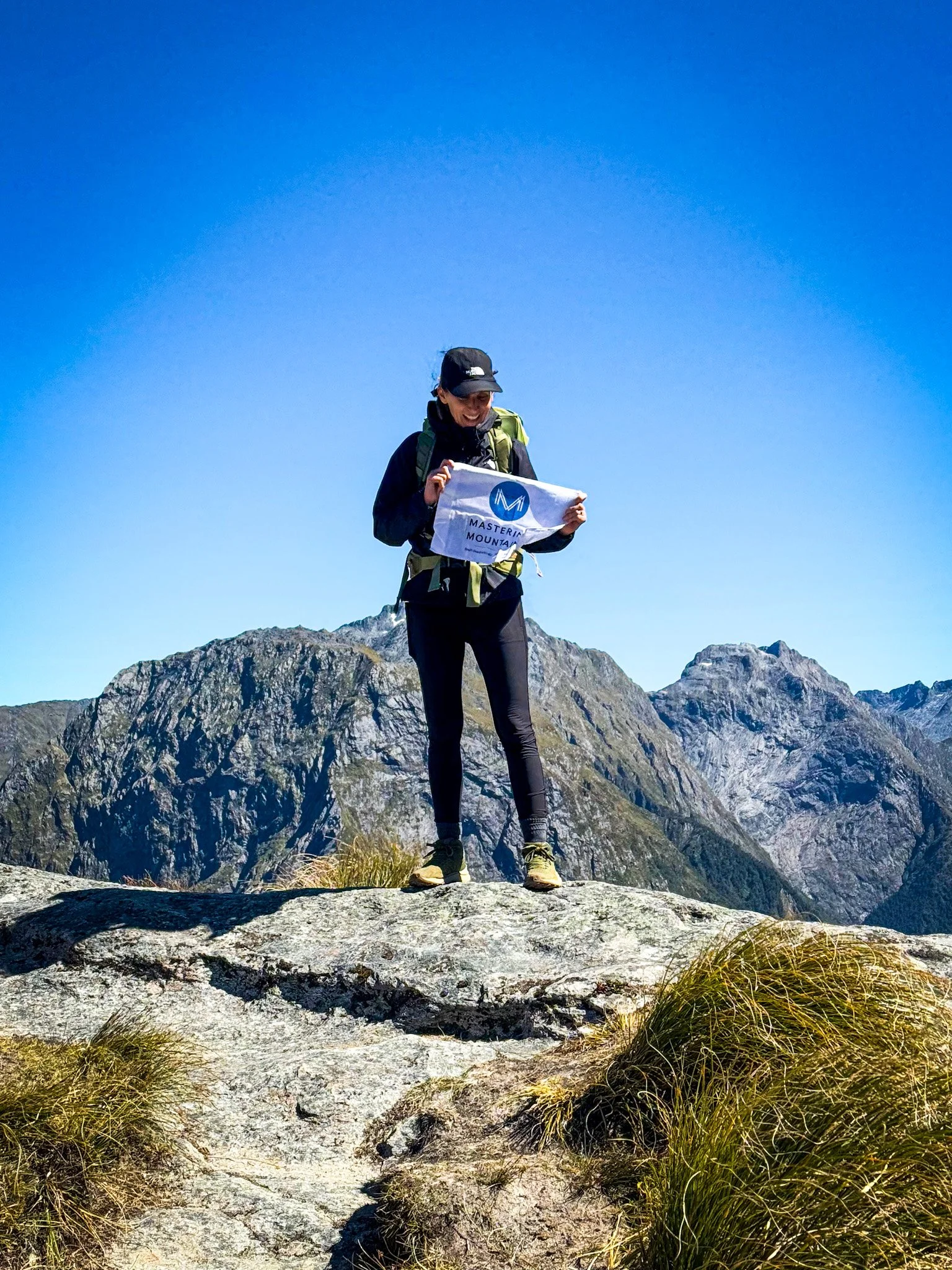
Testimonial: Steph Nierstenhoefer (MS)
Steph has multiple sclerosis and struggled to walk more than a couple of kilometres when she joined our programme. Earlier this year, after nine months of intensive rehabilitation and a year of mentoring, she successfully accomplished her goal of walking the Milford Track with her partner and their daughter over four days, a step toward their larger goal of completing all of New Zealand's Great Walks.
Reflecting on her rehabilitation journey, Steph writes: “The support from Mastering Mountains has been absolutely life-changing. The grant came at a time when I was feeling lost, unsure of how to move forward with my diagnosis. I was struggling to accept what MS meant for my future, but this support helped me shift my mindset.
“The support I received helped me accept my diagnosis, and connecting with others who understand MS made a huge difference. Knowing I’m not alone and that I can still adapt, explore, and embrace adventure has been truly life-changing. I’ve learned to accept support when I need it and to reach out to others with MS.
“I’ve realised that resilience isn’t about never struggling—it’s about finding ways to adapt, keep moving, and return to the things I love the most. The outdoors is still mine to explore, at my own pace, on my own terms. The future still holds adventure, just in a different way, and that’s okay.”
Gallery

















![Katy Glenie | Mastering Mountains [11152120211104_111521].jpg](https://images.squarespace-cdn.com/content/v1/60f71a2312a07a78a2c4d29d/1641429929466-7CZDNV2HLELGXL9QY5GZ/Katy+Glenie+%7C+Mastering+Mountains+%5B11152120211104_111521%5D.jpg)
![Katy Glenie | Mastering Mountains [14283620211102_142836].jpg](https://images.squarespace-cdn.com/content/v1/60f71a2312a07a78a2c4d29d/1641429948950-U4G99850X8VMF7NMU250/Katy+Glenie+%7C+Mastering+Mountains+%5B14283620211102_142836%5D.jpg)
![Katy Glenie | Mastering Mountains [14125620211102_141256].jpg](https://images.squarespace-cdn.com/content/v1/60f71a2312a07a78a2c4d29d/1641429936175-772YTJV76F410XM4M1T7/Katy+Glenie+%7C+Mastering+Mountains+%5B14125620211102_141256%5D.jpg)
![Katy Glenie | Mastering Mountains [7455_MG_7455].jpg](https://images.squarespace-cdn.com/content/v1/60f71a2312a07a78a2c4d29d/1641429897748-G0T1Z1925QDCJNTLVI1Z/Katy+Glenie+%7C+Mastering+Mountains+%5B7455_MG_7455%5D.jpg)


![Bryce mackenzie - Mastering Mountains_[Nick_Allen_1583IMG_1583].jpg](https://images.squarespace-cdn.com/content/v1/60f71a2312a07a78a2c4d29d/1627773036049-IGWB1NFUF5VF2LEHEZGQ/Bryce+mackenzie+-+Mastering+Mountains_%5BNick_Allen_1583IMG_1583%5D.jpg)

Support Us
Mastering Mountains is a charitable trust. We rely on donations to support and mentor people in New Zealand with Multiple Sclerosis and Functional Neurological Disorder. Your support will help us reach more people, changing their lives for good.