Thriving through Connection: Bryce Mackenzie

As Mastering Mountains marks 10 years since our first programme participant, we’re celebrating by sharing the stories of some of the remarkable people we’ve had the privilege of supporting. Bryce Mackenzie’s story begins with a deep love of the outdoors — not as a place to prove himself, but as a place to belong with the people he loves most. When multiple sclerosis entered the picture, that freedom slowly slipped away, and Bryce faced years of setbacks, isolation, and fear. What happened next is a story of rebuilding hope, community, and self-belief — one pedal stroke at a time.
Soaking in the warm glow of a sunrise with the people closest to him is the good life for Bryce Mackenzie. When asked to describe himself in three or four words, he replied: “Family is really important to me, so it'd be husband, father, brother, son.” Not only is family central to Bryce’s identity, but enjoying the outdoors together brings significant meaning to his life. He described his love of paddleboarding with his family: “It's relaxing, you know, to go out on a nice, calm morning, and it’s something that we can all do together. We just putter along, taking photos of the sunrise, just relaxing.”
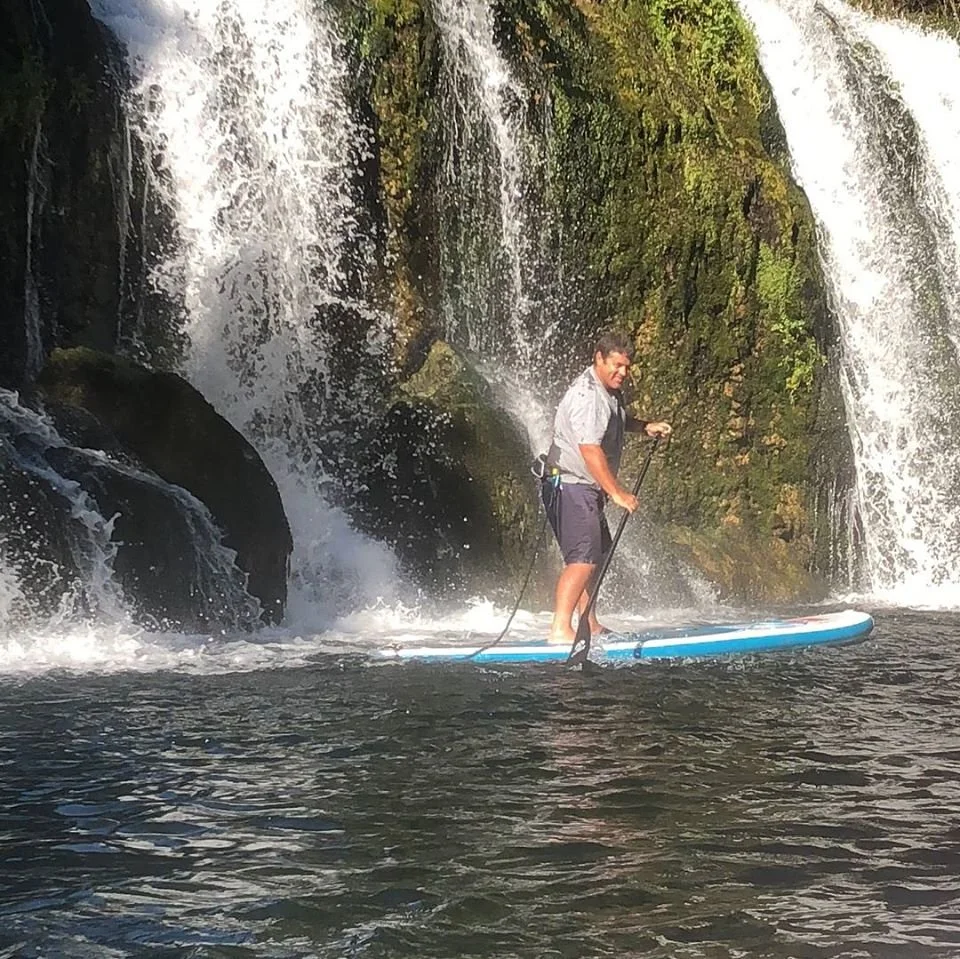
Bryce outdoors on his paddleboard. (Photo: Bryce Mackenzie)
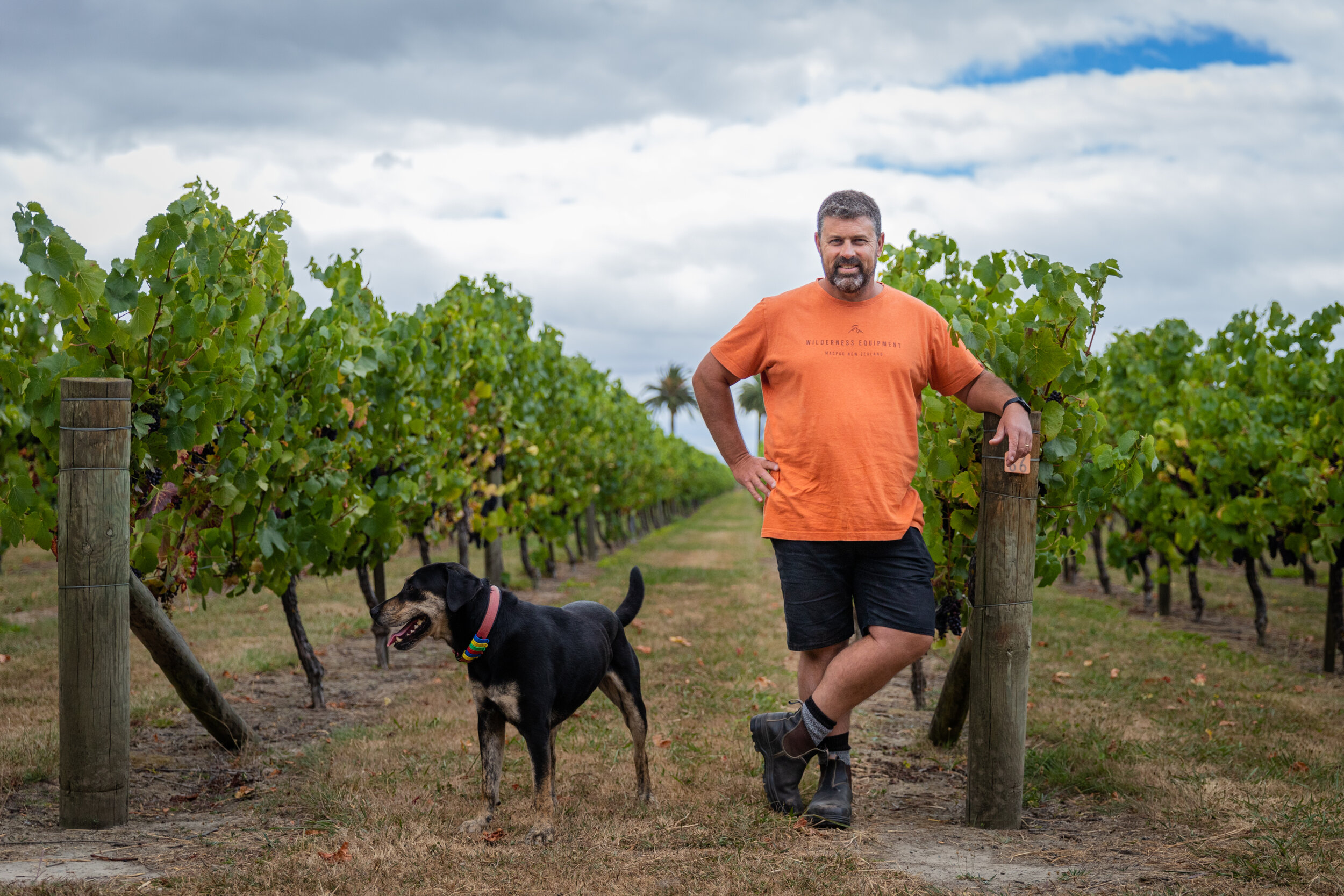
Getting outdoors has always been important to Bryce, influencing his choices for both play and his work in the rich soils and vineyards of Hawke’s Bay. For 24 years, he worked as a viticulturist, relishing the opportunity to work in the open air, rather than in an office. More recently, he has moved into a new role within the winery and enjoys playing a part in assuring the quality of the wine from grape to glass.
Bryce’s love of the outdoors was planted in him by his parents: “I just liked being outdoors. Everything was always outdoors, and Mum and Dad always encouraged us to be outdoors. It was just what we did.” From a young age, Bryce loved the freedom and adventure of getting out in the Hawke’s Bay, especially on his bike. Through his teenage years and into adulthood, Bryce thrived on his involvement in numerous sports, including competitive cycling, swimming, and triathlons, as well as surf lifesaving, canoe polo, and white-water canoeing. “I met some inspirational people and made some lifelong friends.”
The onset of winter
Bryce had always found he could rely on his body to carry him through his active lifestyle, but then something changed. Over time, he started to notice subtle and unexplained changes – pins and needles in his arms or legs that were misdiagnosed as “pinched nerves”, a (mis)diagnosis of “shingles” with no rash, and “sciatica” that didn’t respond to treatment. A few years later, in 2009, he came face to face with the reality of a relapsing remitting MS diagnosis; his neurologist indicated that each of the earlier misdiagnoses could be attributed to a particular lesion on his brain or spinal cord.
After receiving the diagnosis, he researched MS and what it meant for his life; as far as he was concerned, his prognosis was not hopeful:
“[At that time] there was a perception that you get a diagnosis, and a couple of years later you stop working, and a couple of years later you’re in a wheelchair for the rest of your life – so that hit me really hard. I did have quite a few years where I was really worried about that, almost prepping for that to happen.”
The years that followed were hard, and Bryce struggled to get outdoors. He admitted that he “sat on the couch feeling sorry for myself for the good part of a decade.” His life during this time involved a lot of uphill battles – multiple relapses and a significant amount of time in hospital.
It was also an isolating time: “Nobody really understands what you’re going through and the battles in your mind. If you struggle with verbal communication, it’s difficult to explain what’s going on – and takes less energy not to explain – a vicious cycle of people not being able to help if you don’t communicate.”
Budbreak: The growth phase
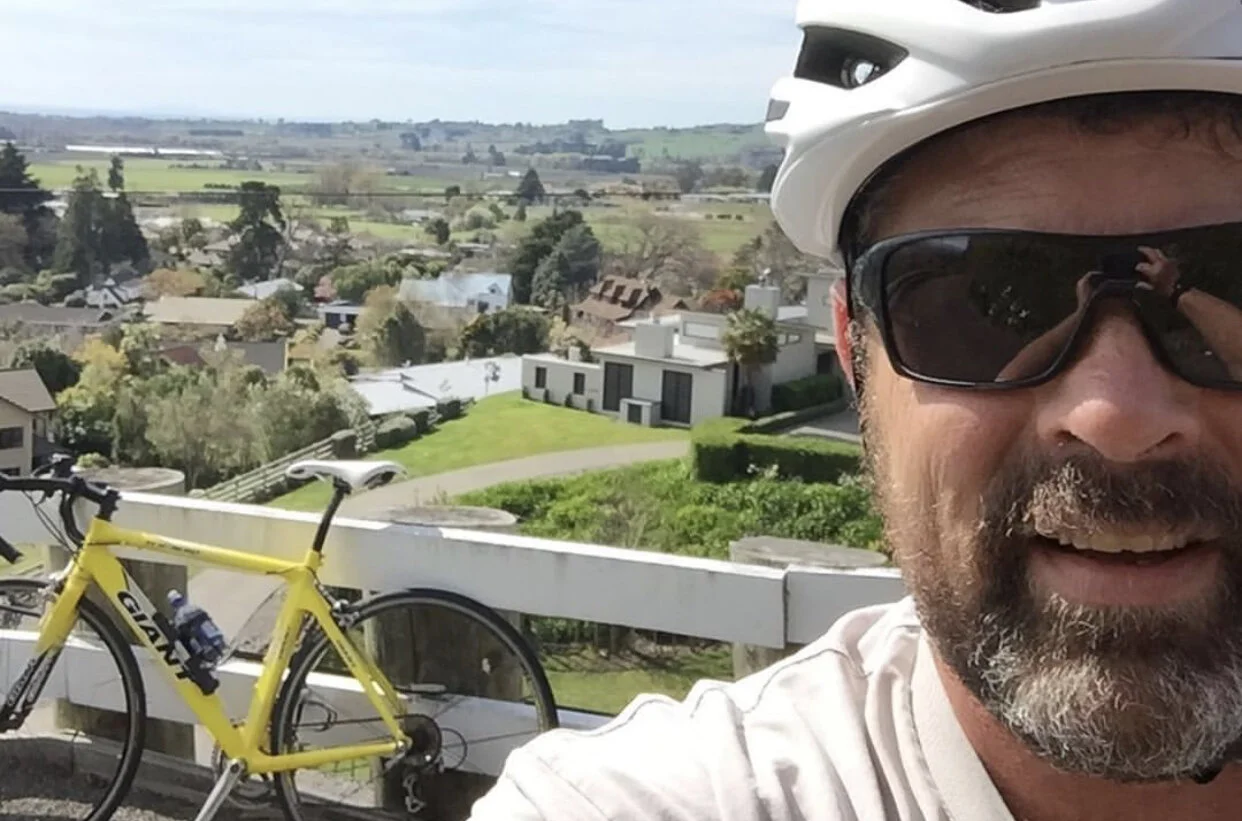
Getting out on his bike, ready to make a change. (Photo: Bryce Mackenzie)
In 2019, Bryce decided it was time to make a change. At his MS nurse's suggestion, he applied for the Mastering Mountains Programme. When he heard he had been accepted, he was “absolutely over the moon ... really excited, and I just wanted to get on with the journey back to health, back to fitness. It came at a really good time.”
With the help of Mastering Mountains, Bryce gradually began working towards his chosen mission: the 160km Lake Taupō Cycle Challenge. This challenging endurance event had always been on his bucket list, but “life got in the way.” Over the course of a year, he received support and motivation through the help and knowledge of a personal trainer, and a contribution toward a new bike.
Training and preparing for the challenge were far from straightforward. As he began moving his body and getting active again, Bryce encountered various challenges, especially with his knees. One moment he was progressing well in his fitness journey, and all of a sudden he’d have a setback – “an injury, a relapse or a pseudo relapse that put me back to square one ... So it was almost two steps forward, one step back, which isn't very good for your mental health.”
Another unexpected setback was the arrival of the COVID pandemic. Like many large-scale public events at that time, the Lake Taupō Cycle Challenge was cancelled – first in 2020, and then again in 2021. Unsure of when the event might run again, Bryce decided to organise an event of his own.
Véraison: Maturation
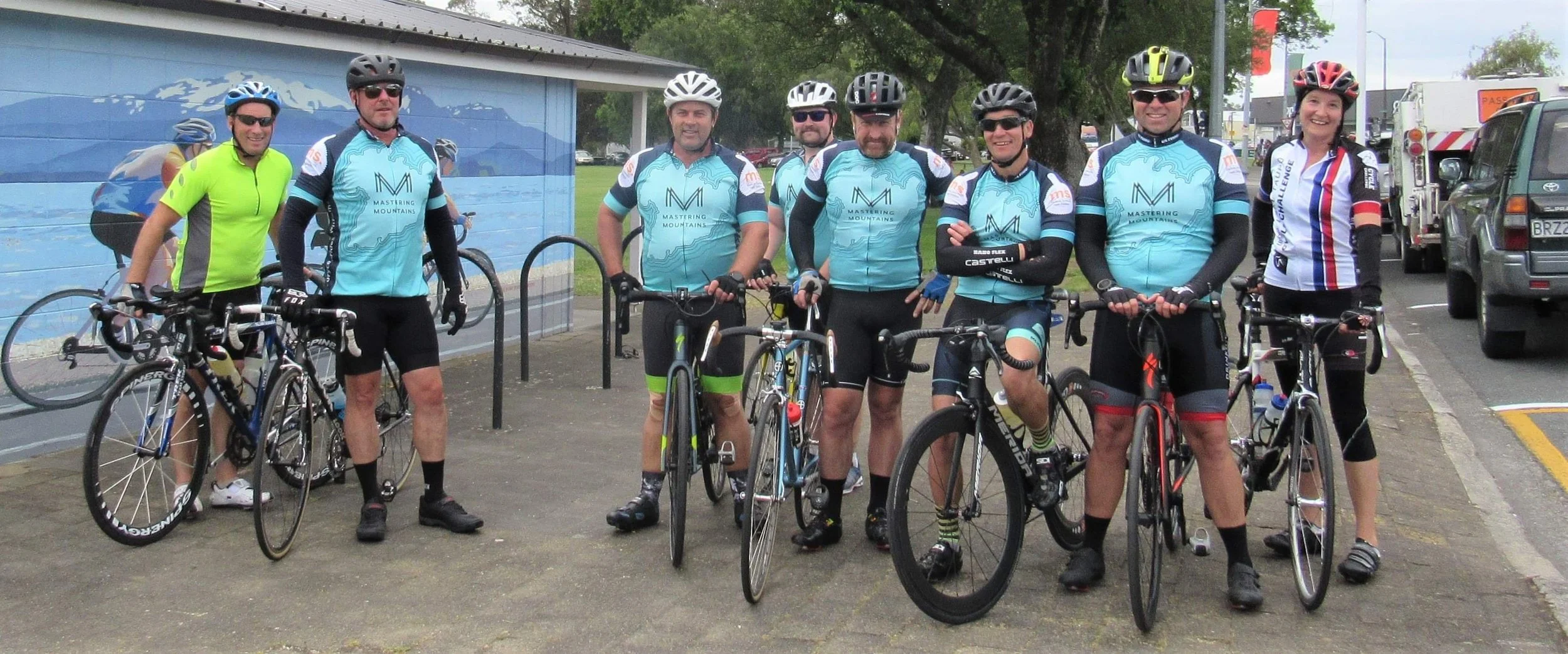
Bryce and his team, ready to make an early start on the 160km Lake Taupō Cycle Challenge course. (Photo: Bryce Mackenzie)
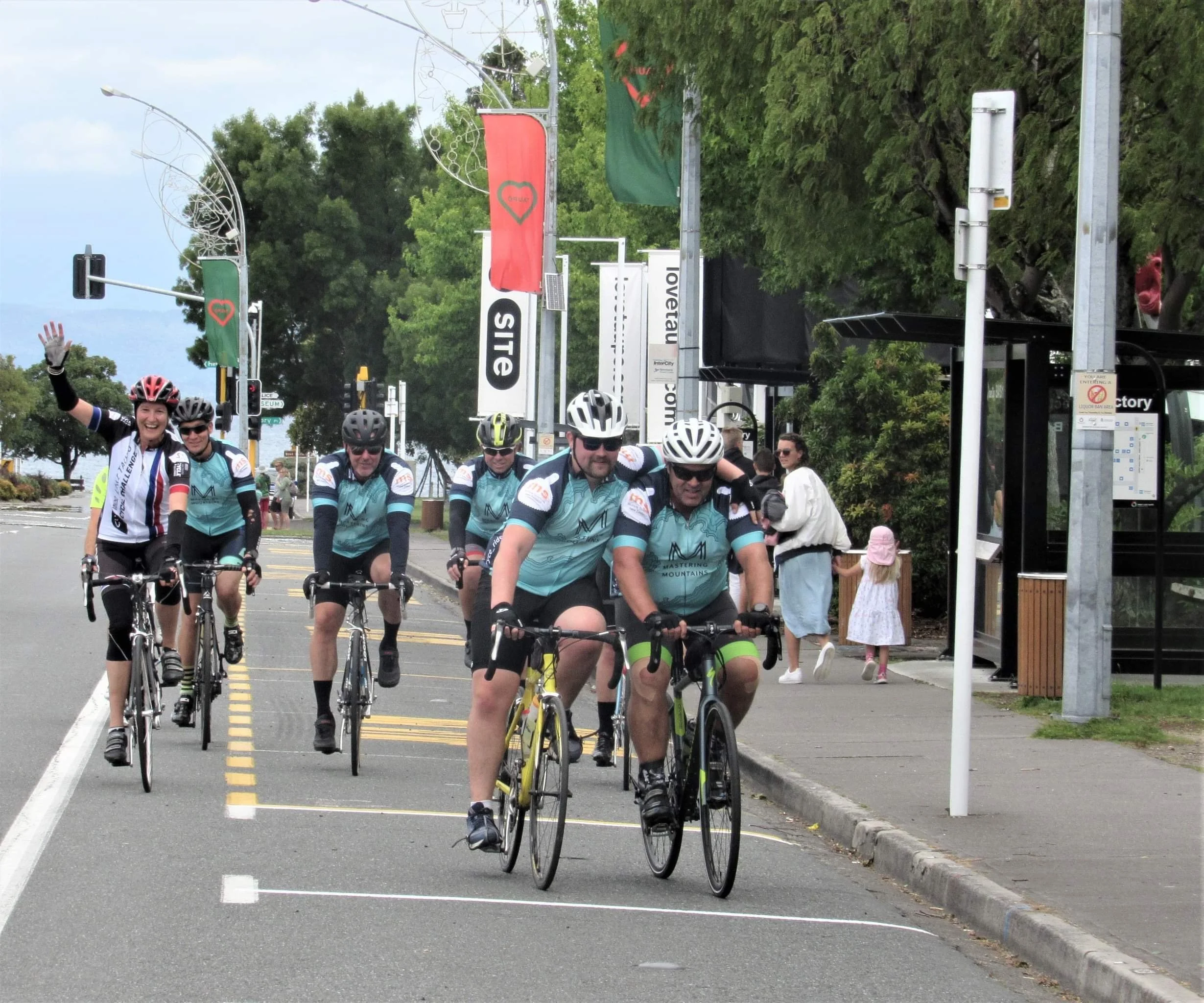
Bryce finally set off to achieve his goal in December 2020, with a group of close friends and family – his support team. No longer a race of thousands, their intimate event still required logistical management, but his crew was completely committed and consisted of roughly 20 people: some riding the entire course, others riding sections, and some in support vehicles providing refreshment and cheering them on along the way. No matter their part, everyone was there in full support. “Everybody played a pivotal role in the day ... It was overwhelming, humbling. I get quite emotional because it was something that I wanted to do for myself, but so many other people wanted to help me achieve it. It was brilliant.”
It was an early start on the morning of the ride, and Bryce remembers feeling significant anxiety. He wasn’t sure whether his body would sustain him through the whole event, and he was worried about how that would impact everyone else:
“The biggest thing for me was letting down all of the people who had helped along the way. People had taken time off work, paid for jerseys, done their own training, paid for accommodation, and travelled long distances to get to Taupō. So, all of that culminated in feeling really nervous that I wasn't going to be able to do it.”
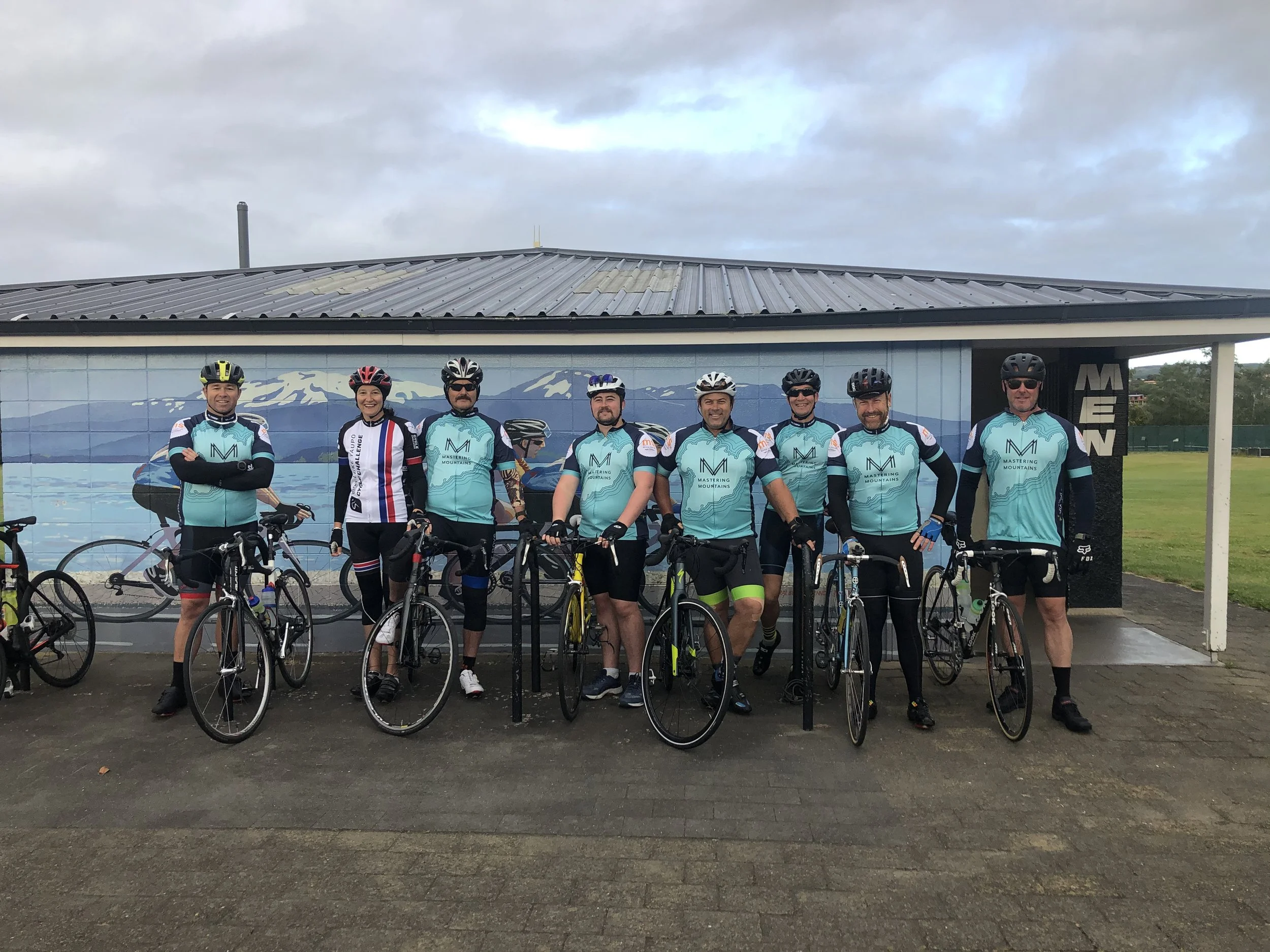
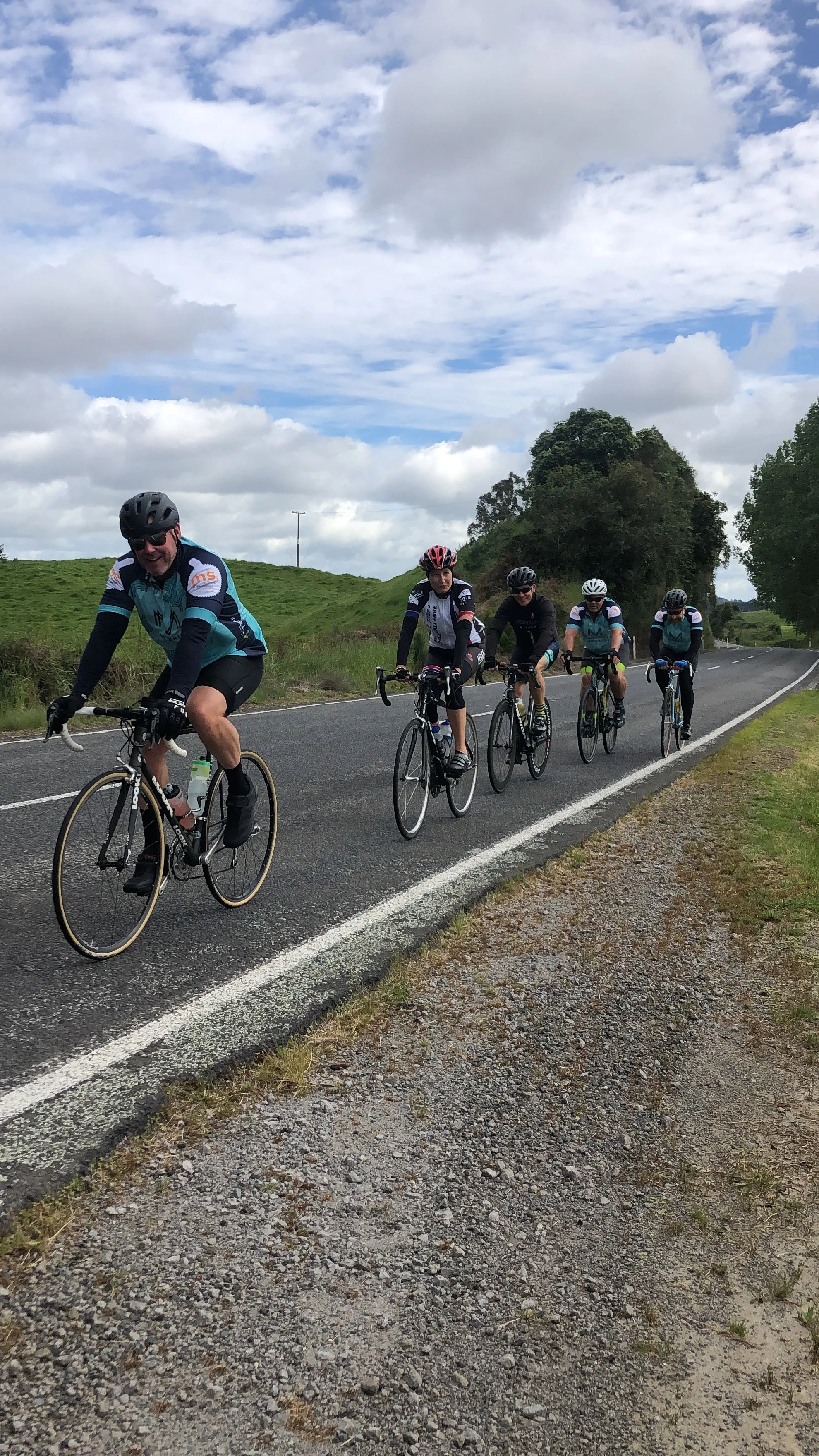
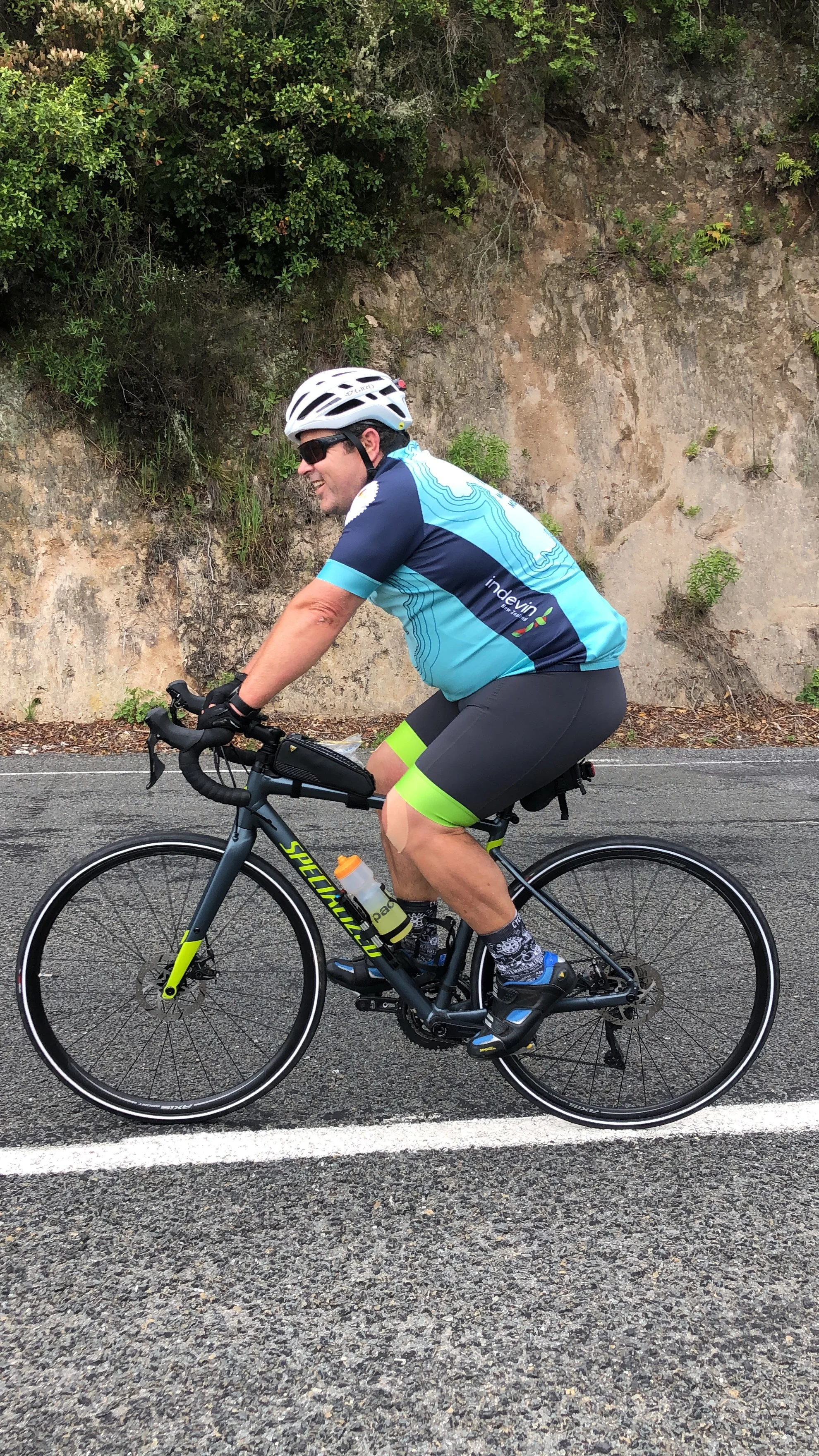
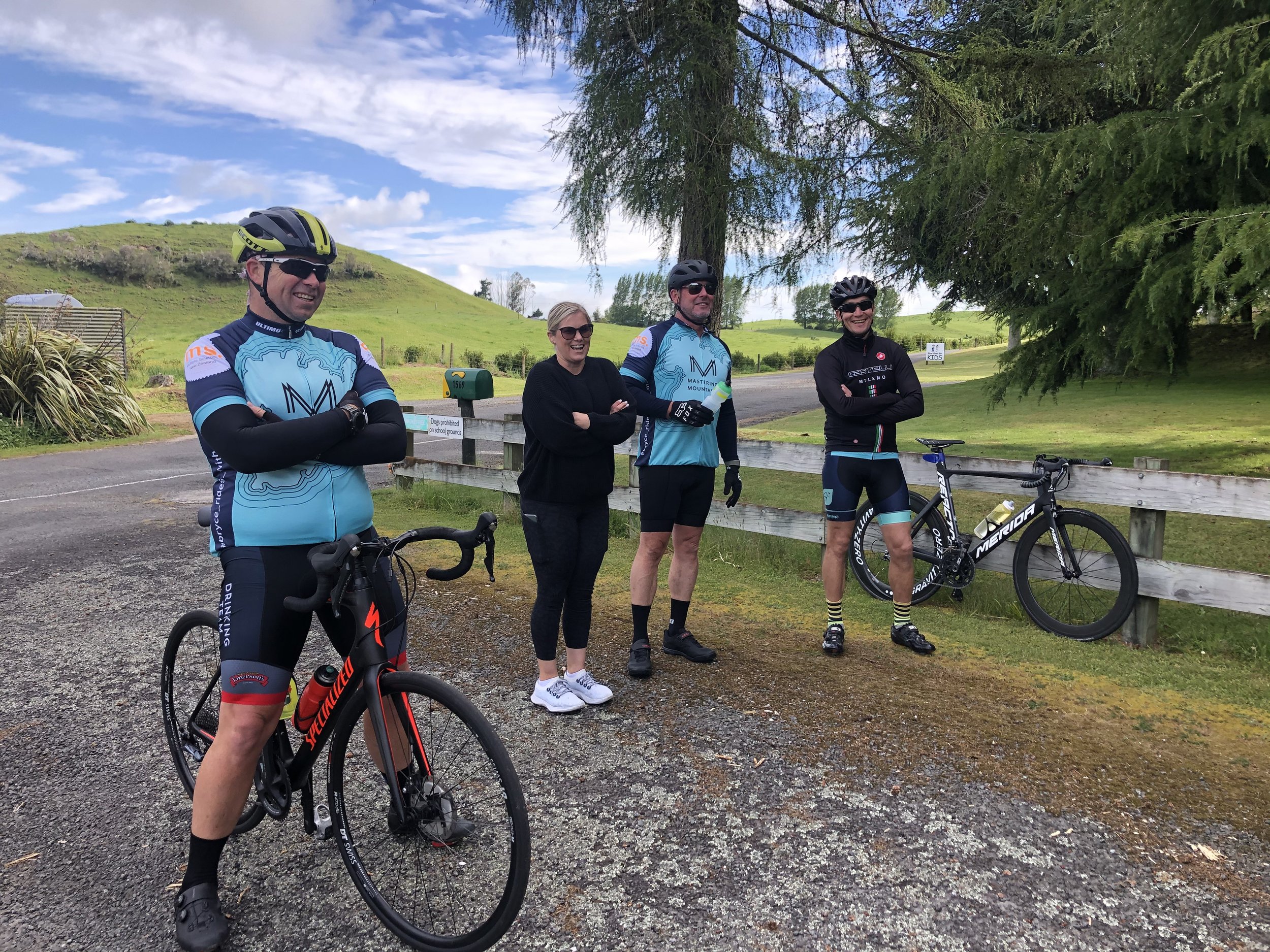
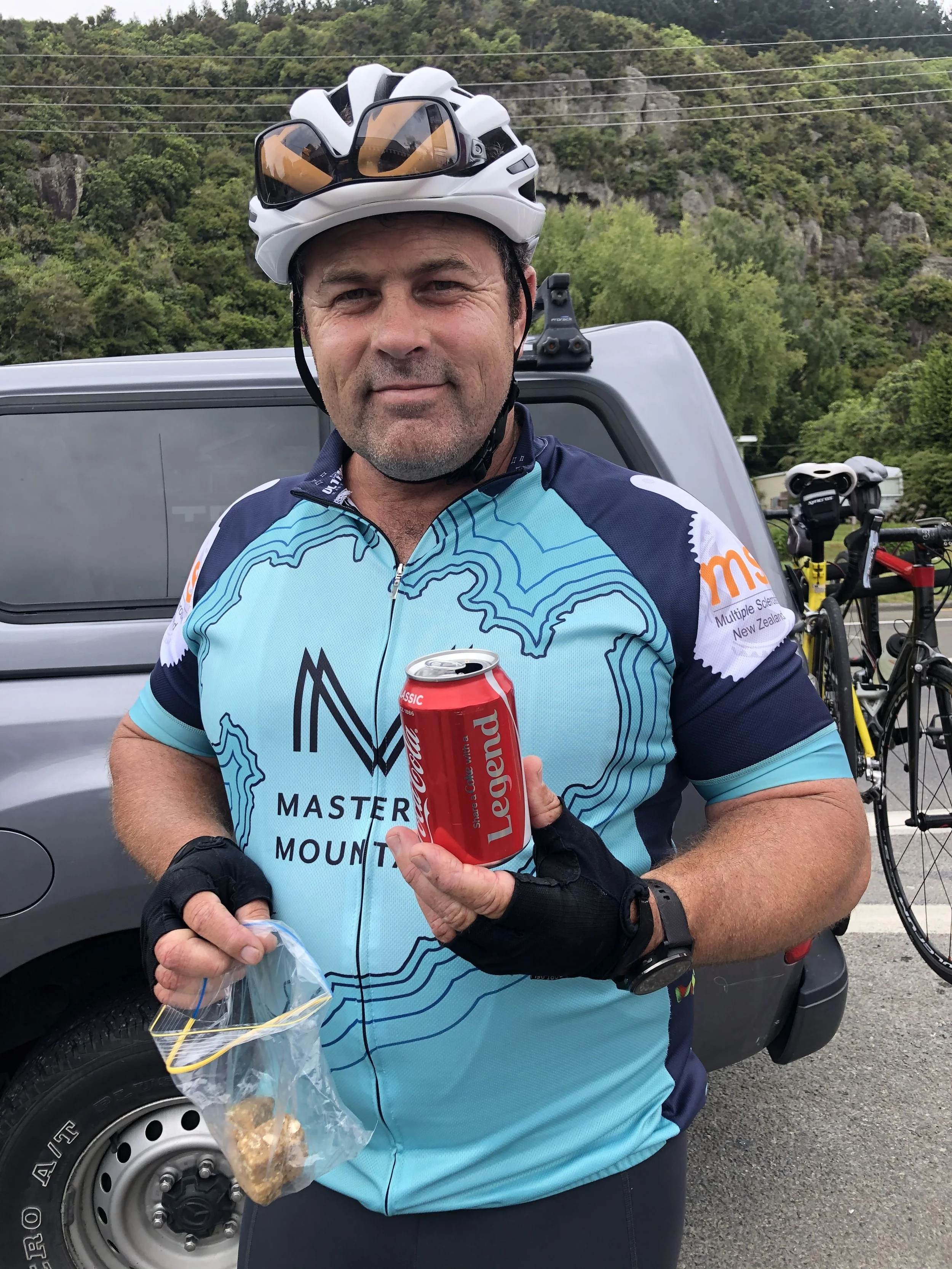
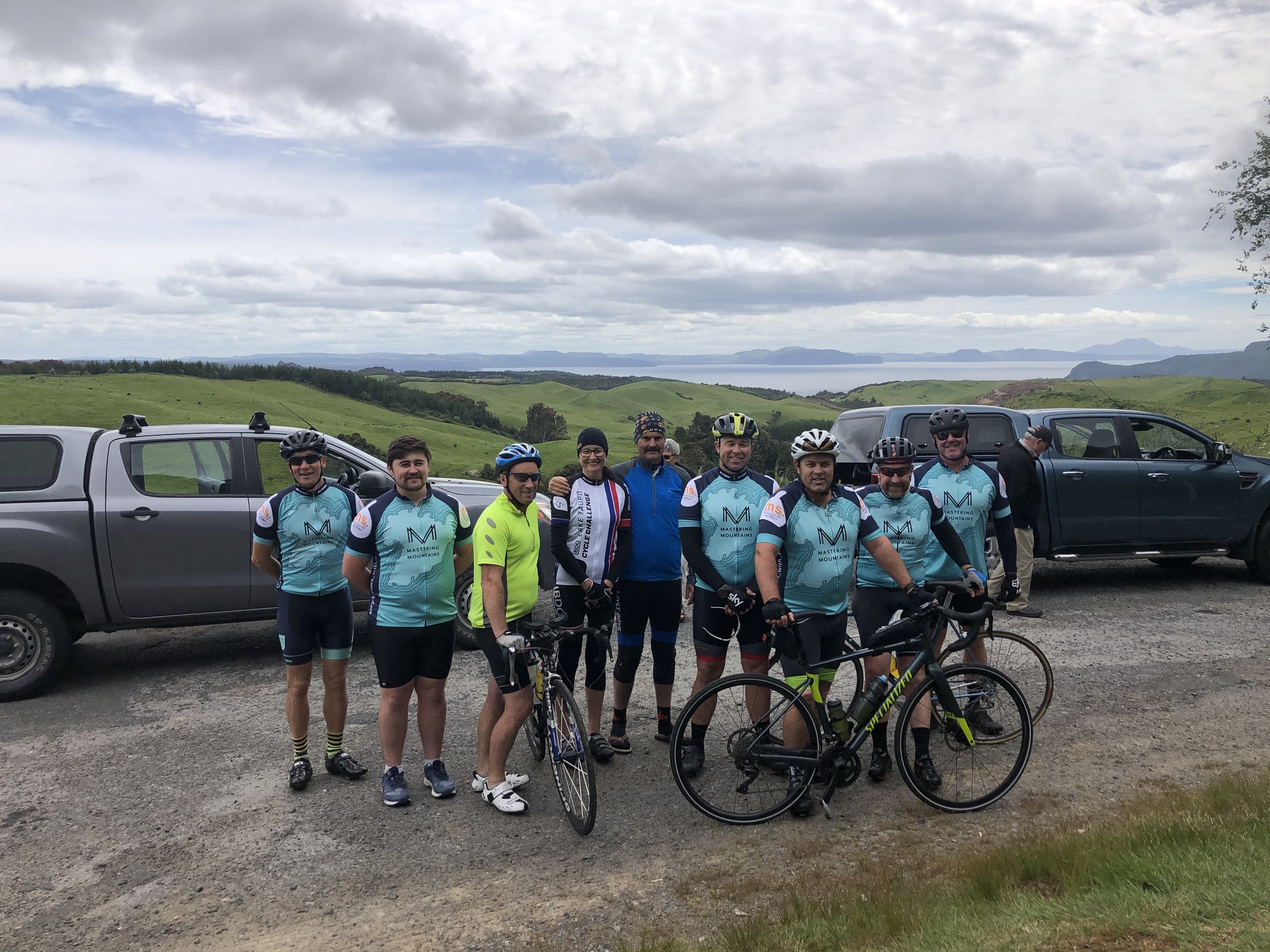
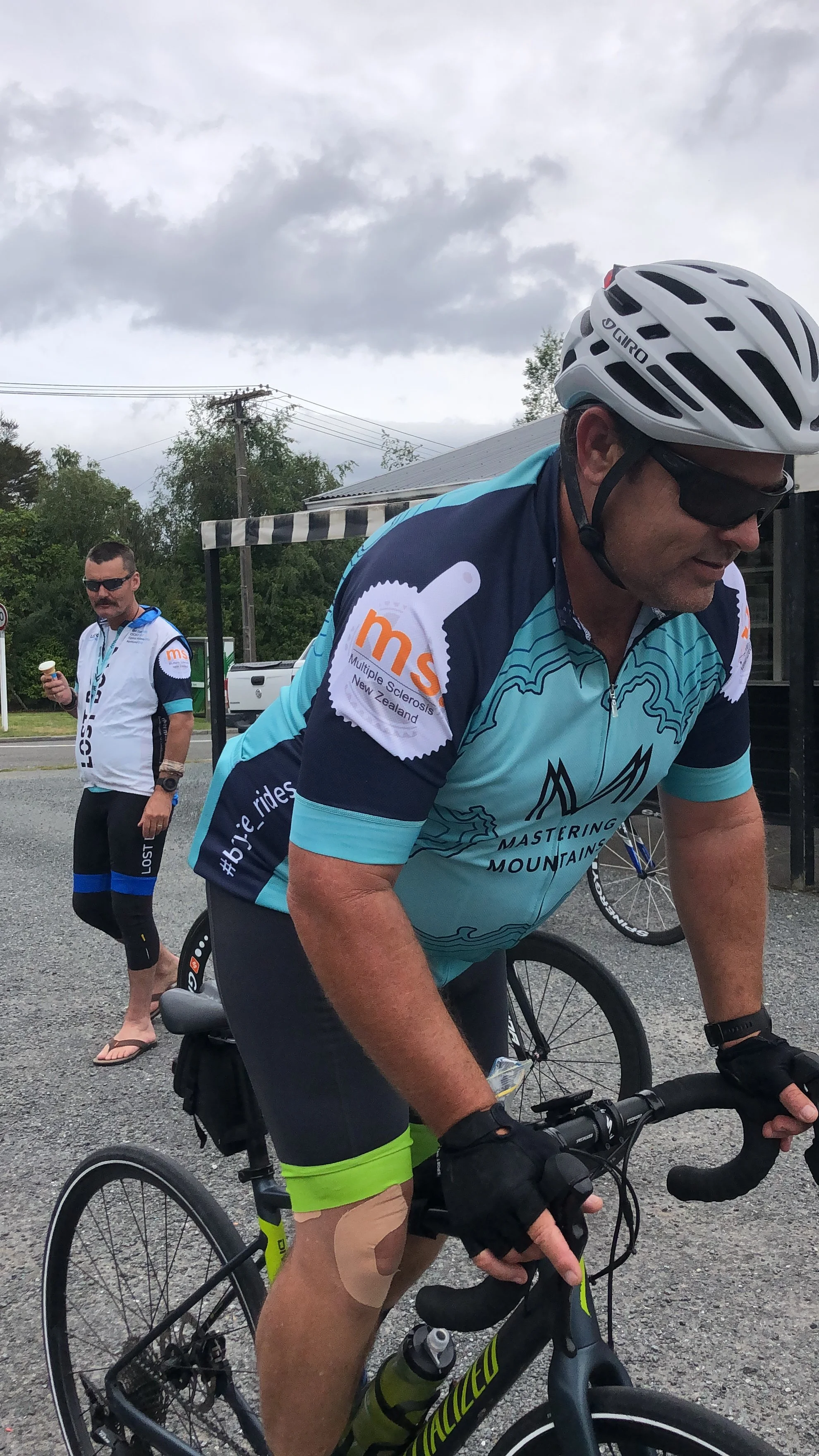
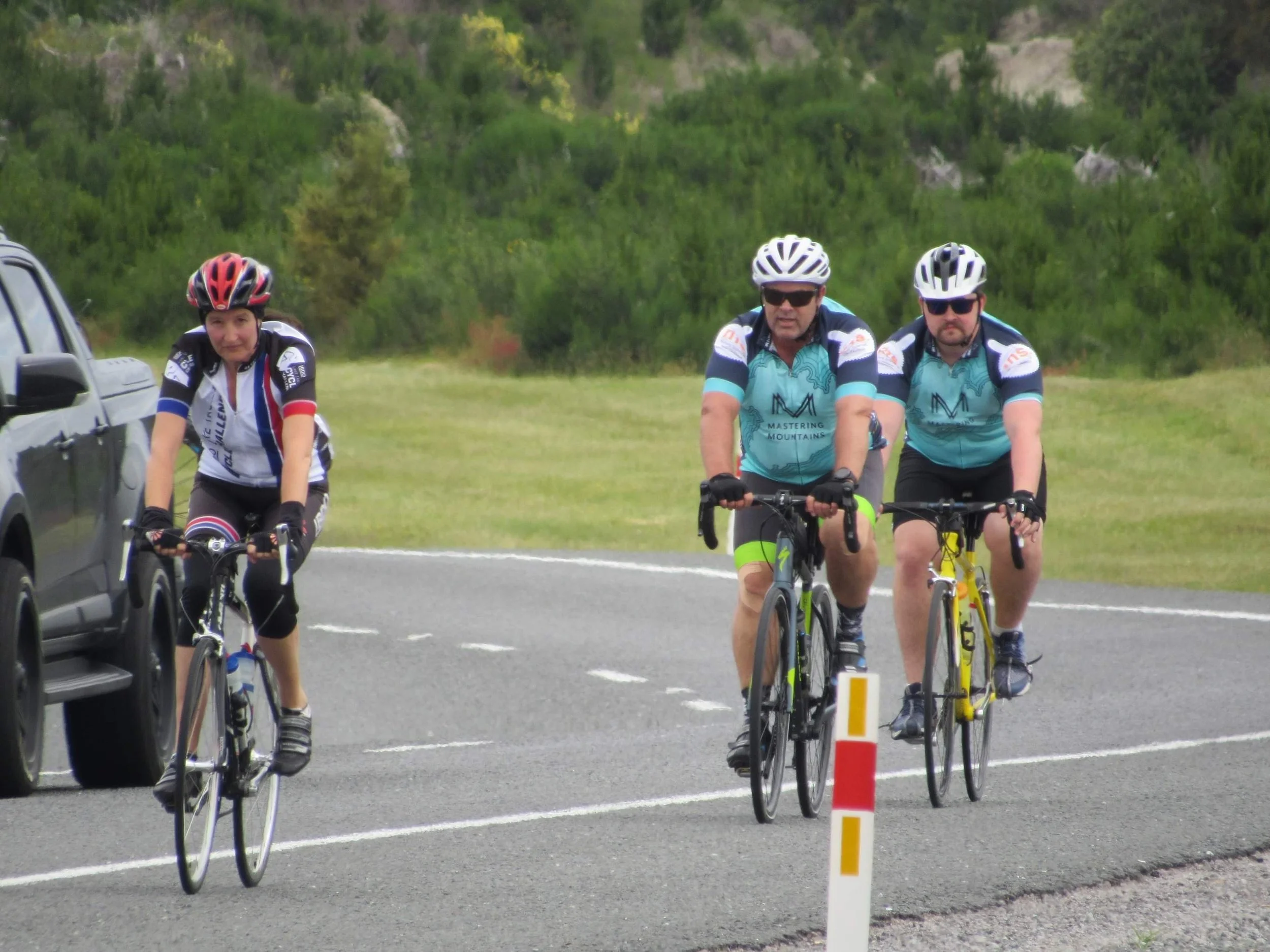
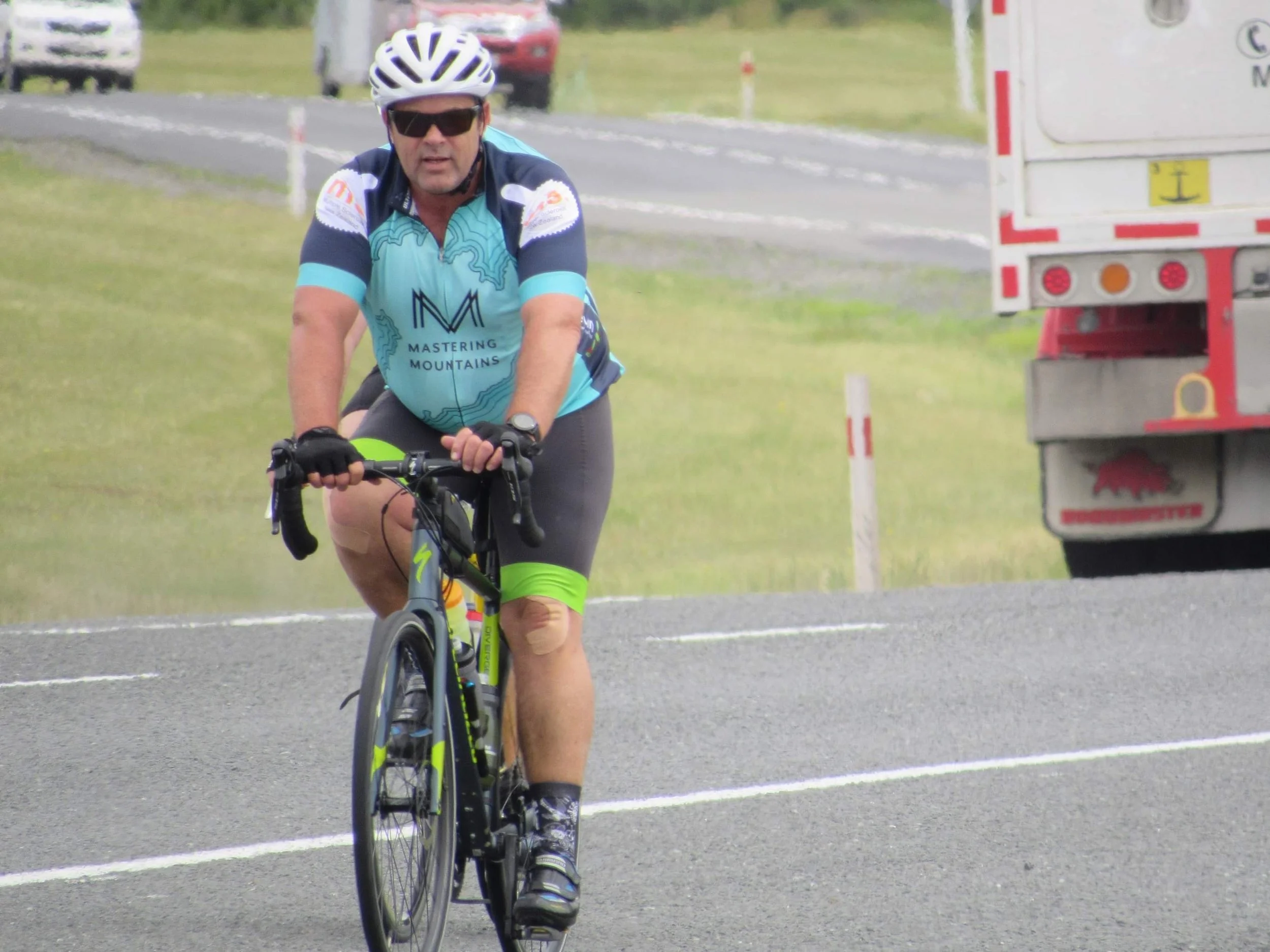
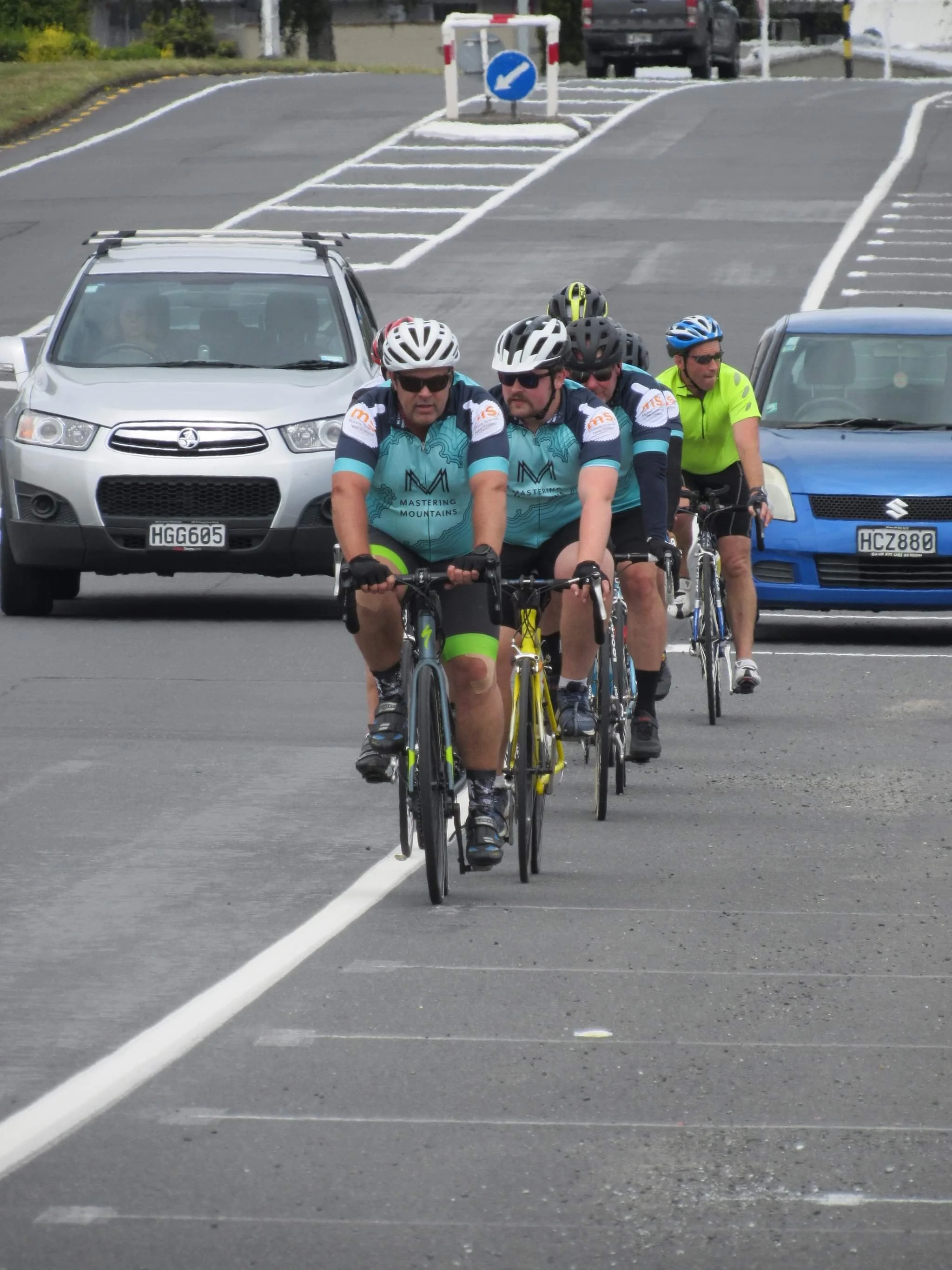
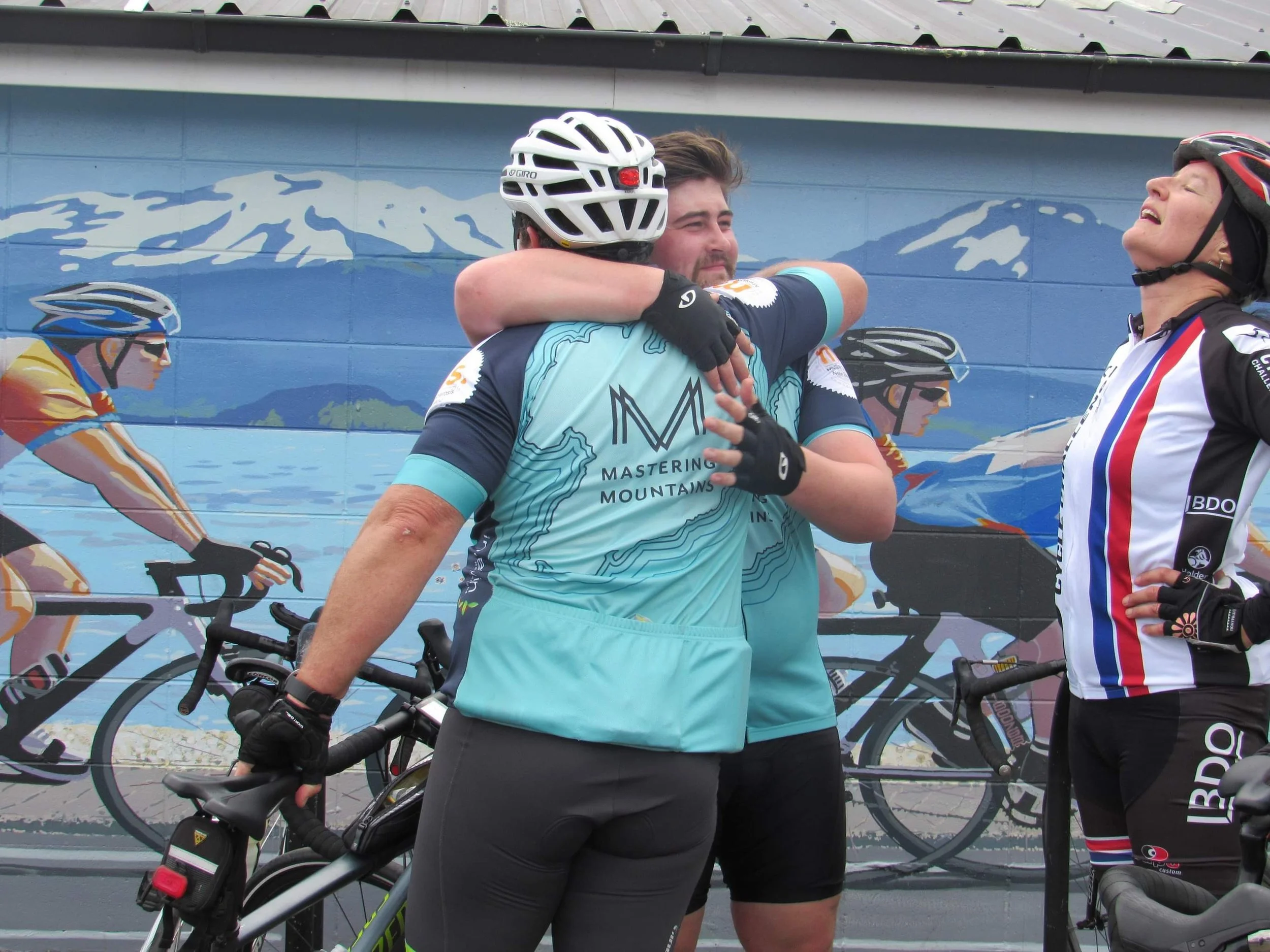
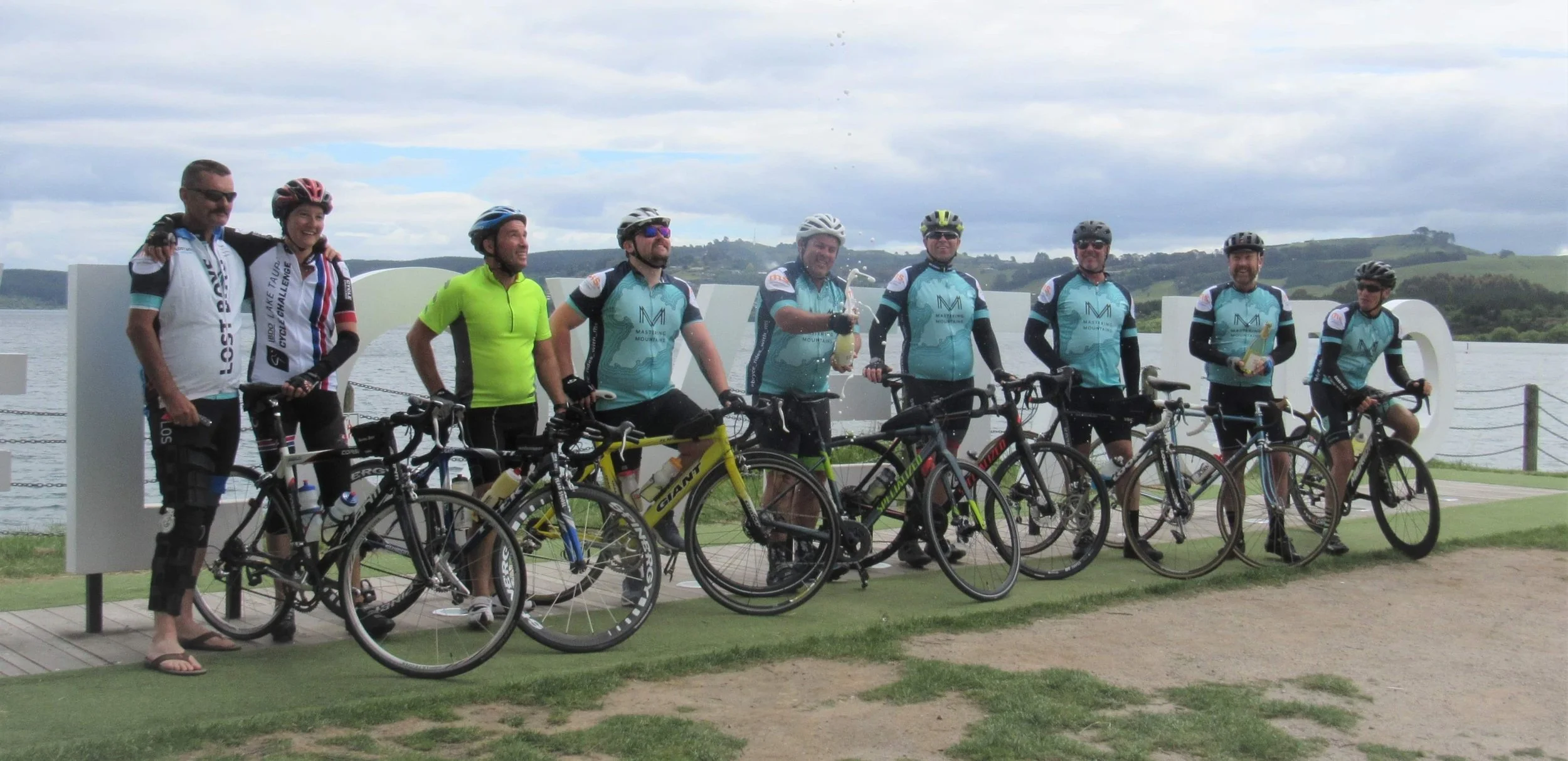
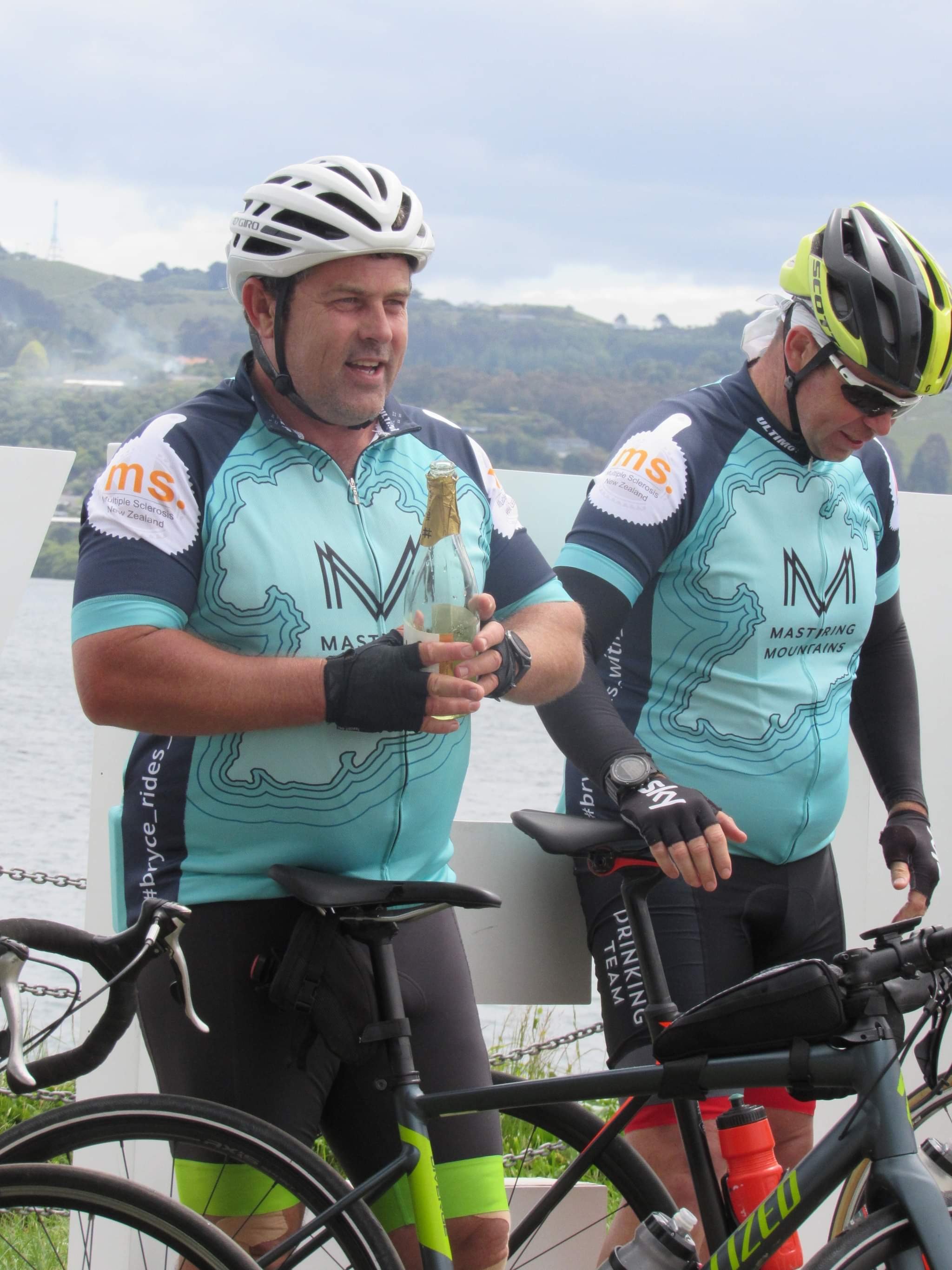
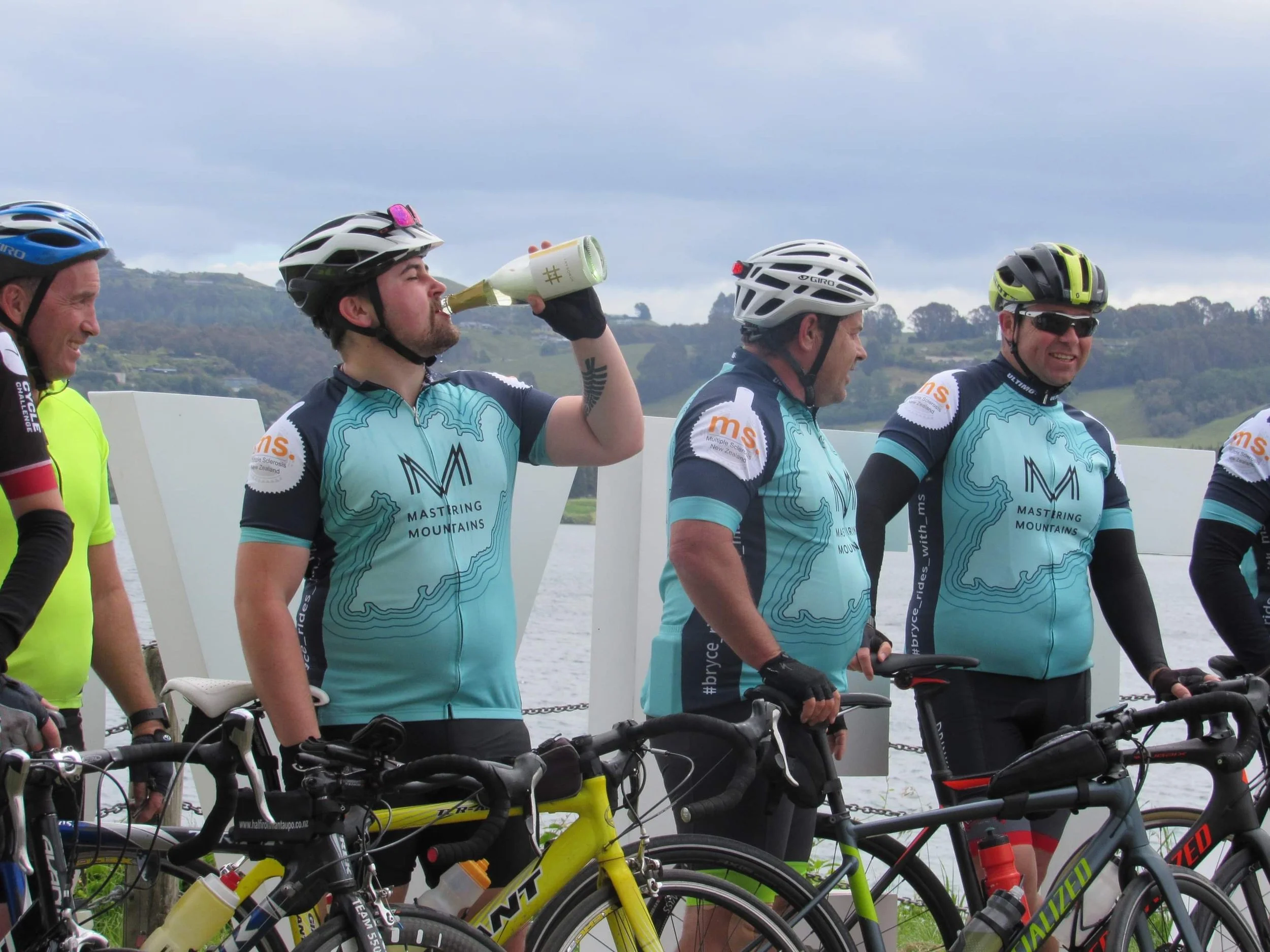
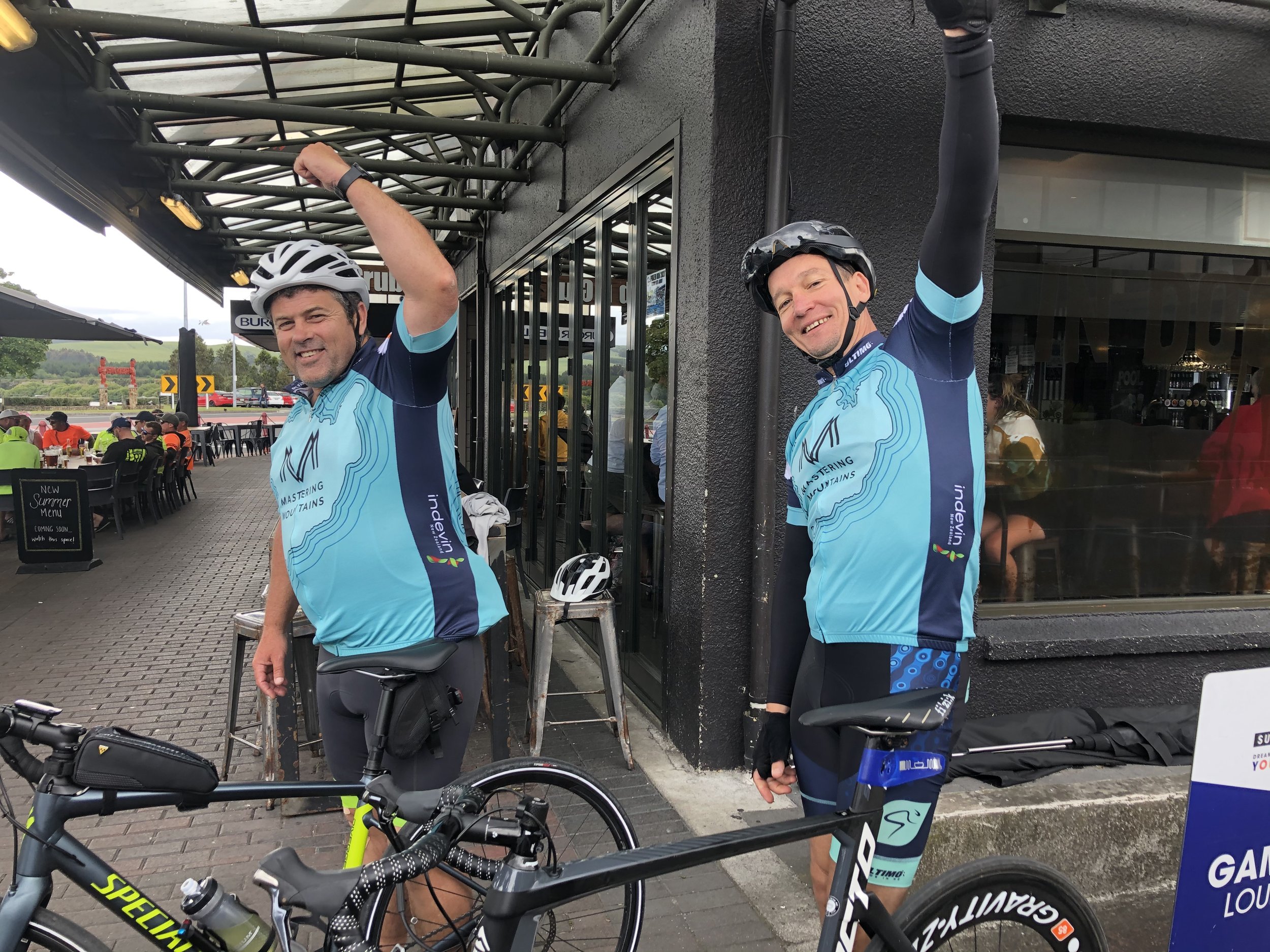
For Bryce, the 10-minute ride to the start line was “make or break” as an indicator of how his body would respond to the event. Fortunately, he had a sense it was going to be okay. “I was feeling good ... [and I thought] – ‘Go for it and enjoy the moment.’”
Heading out, Bryce and his team had a plan to pace their trip and celebrate along the way. Bryce took the ride at his own speed, eating and drinking every 15 minutes to stay energised and hydrated. At key points, his logistics crew, the “cheerleaders,” were waiting at the side of the road to celebrate his progress. The riders had three group stops, including an obligatory ice cream at the Kuratau Dairy. However, Bryce arrived feeling “really tired and really sore.” Still before him was the final push up the infamous Hatepe Hill – the most challenging section of the route.
“I was really nervous about Hatepe Hill – it’s quite long, it’s steep, and you don’t really get any reprieve,” Bryce comments. “I had to count my pedal strokes and say to myself – ‘Just one pedal stroke at a time, and you'll get to the top.’ I really leaned on that mantra.” Finally reaching the top, Bryce found that everyone else was there, cheering him on.
Coasting down the other side of the hill and back into Taupō township, Bryce experienced a mix of emotions: “[I felt] amazed, really, that I did it. And kind of relieved ... But so much elation tempered with exhaustion – like I was absolutely had it, but pretty amazed that my body held up to it, actually. I was stoked.”
Reconnecting with his whole team at the #LoveTaupō sign for photos and celebrations at the end of the race, there was a real sense of elation. “Everyone was high-fiving and hugging and [there were] a few tears.” But for Bryce, there was also an incredible sense of community: “It made it so much more enjoyable to share the experience with other people. And it wasn't only the people that were riding with me and supporting me in cars, it was also the podiatrists, the physios, the GPs, the personal trainers, and everybody at the gym encouraging me.”
Reflecting back on that day, Bryce says:
“I'm not gonna lie ... The challenge itself was really difficult, and the time leading up to it was really difficult, but the highlight was actually doing it, and proving to myself ... proving to my kids especially, and to others that if you really put your mind to it, you can almost do anything, no matter what your head space is, what your physical space is.”
However, the ride was not without its consequences; a week after the event, the fatigue caught up with him. “I did the ride, went back to work really buzzing, and then it just hit me like a ton of bricks.” Nonetheless, Bryce affirms the huge value it had for him, “It was seven days in bed, but definitely worth it. ... The challenge was a huge milestone for me. And so now I've ticked that off my bucket list, and it's just a really huge sense of achievement, pride, and it's given me hope. I’m looking forward to ticking off a few more activities on my bucket list.”
Harvest: A more hopeful path
Through his journey with the Mastering Mountains Programme, Bryce gleaned a number of helpful life lessons that altered his view of the future and offered a more hopeful path ahead.
First, Bryce now sees that there are multiple viable strategies and approaches for managing MS in the long-term for a better prognosis. While he originally viewed his prognosis quite negatively, he now sees MS differently: “MS isn’t the life sentence that it once used to be. There have been a lot of advances in medical help, in terms of disease-modifying drugs, and also a lot of advancements in other therapies ... exercise, meditation, mindfulness, different diets. There are plenty of options and plenty of help available if you reach out for it.”
Second, the perception of his ability shifted, and he realised he has the mental and physical resources to make progress toward a desired outcome. “The challenge definitely shaped my life going forward. The whole programme and process gave me a new understanding and perspective of what I can do, what I can achieve.” For Bryce, keeping the bigger picture in mind, aiming for a clear goal and breaking it down are key: “Goal setting is really important, and [so is] seeing the long game. With multiple sclerosis, you're going to have the good weeks and bad weeks, good days, bad days, but overall, if you keep at it, there is an increase in fitness and health. I think that looking at the long-term goal is really important and really beneficial... and if you break it down into small chunks, I'm not going to say it's easy to achieve it, but it just seems more manageable.”
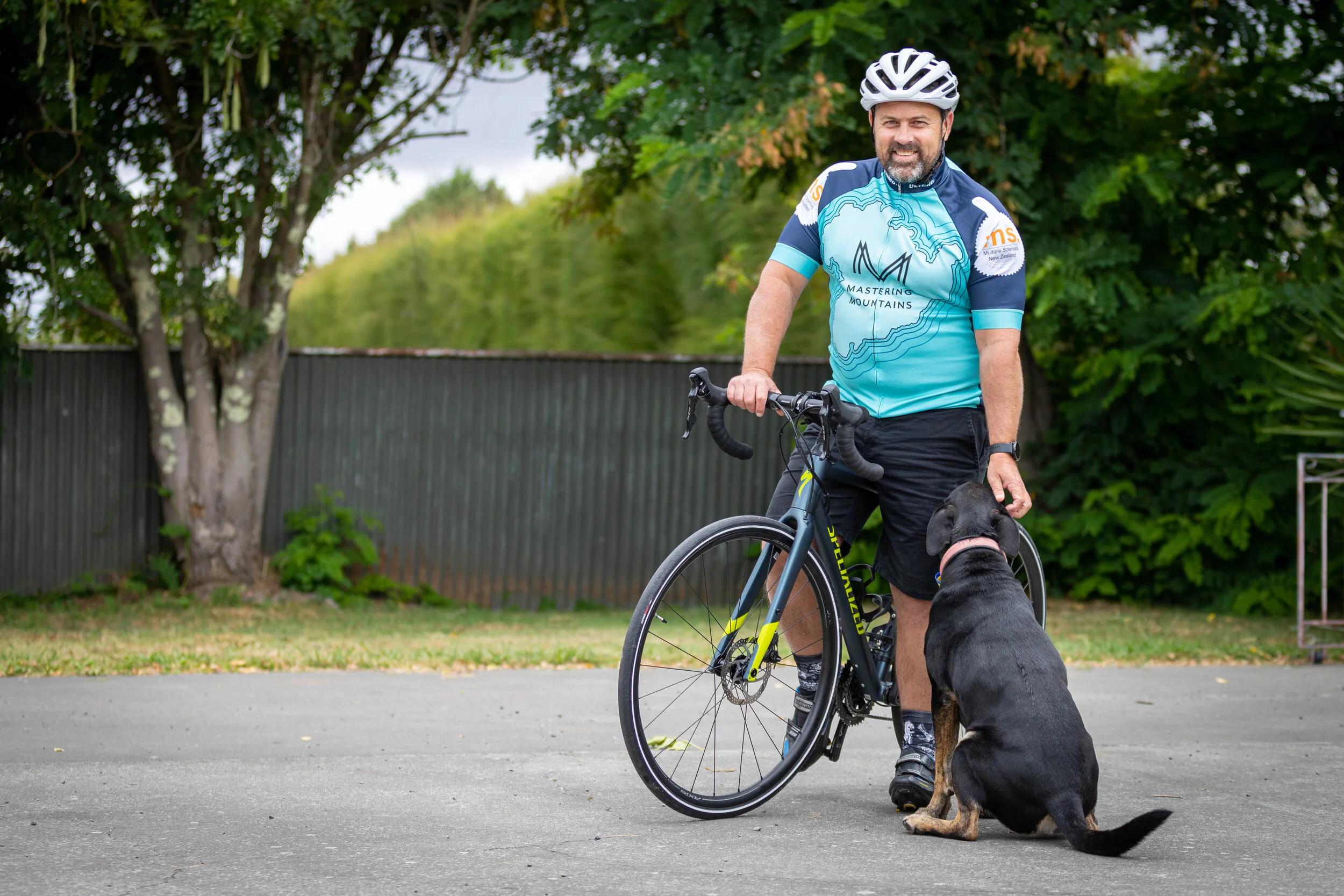
Bryce now faces a more hopeful and connected future. (Photo: Nick Allen, MMCT)
Third, Bryce acknowledged that his involvement with Mastering Mountains highlighted the importance of exercise as a “reset button”. “As everyone knows,” he says, “exercise is so important ... but especially [for] people with chronic conditions.” For Bryce, exercise isn’t just about fitness; it’s also an important part of mental health. “When I’m out exercising, it’s almost meditative because you’re focusing all your energy on what you’re doing, and you can just concentrate on the moment and enjoy it. So exercise is kind of my happy place.”
Fourth, and perhaps most significantly, as Bryce thinks about the future and his goals, he’s found a depth of value in community as a life-giving support system. These connections, much like in a vineyard, sustain him in his journey:
“My family are very supportive and understanding, and the support of the Mastering Mountains family has also been really good. Being part of the programme, with its wraparound support, helped me achieve my goal and helps me continue exercising. I've found it super helpful to have a forum of people who understand the struggle.”
Drawing on these lessons, Bryce has some great goals to keep him riding into the future, both locally and around the country. One of his goals is to ride all 200 kms of the trails around Hawke’s Bay. “There's an informal event called Pathimus Maximus,” he explains, “where you ride all of the paths in one day.” He also hopes to tackle the great rides of New Zealand. “There are 22 of them, I think, and I've done two or three of them so far. I'd just like to carry on and tick them off on a yearly basis.” Most importantly, though, he wants to stay agile and active to keep up with his two-year-old grandson.
Bryce has established his roots in the fertile soil of his love for family and the outdoors, and a healthy mindset. Interconnected with his support system, we’re confident he has created all the conditions needed to thrive – and, like the wine he helps craft, get better with age.
Bryce’s journey is one of many made possible through the Mastering Mountains Programme. If you’re inspired by his story, please consider donating — your support helps people living with neurological conditions rebuild confidence, connection, and the freedom to pursue meaningful outdoor goals.
Per person, it costs us $6,800 to provide rehabilitation, mentoring and education for one year. As a charitable trust, we rely on donations to do our work.